Sutton Hoo
Uncovering the mystery of the ship-burial at Sutton Hoo, in East Suffolk
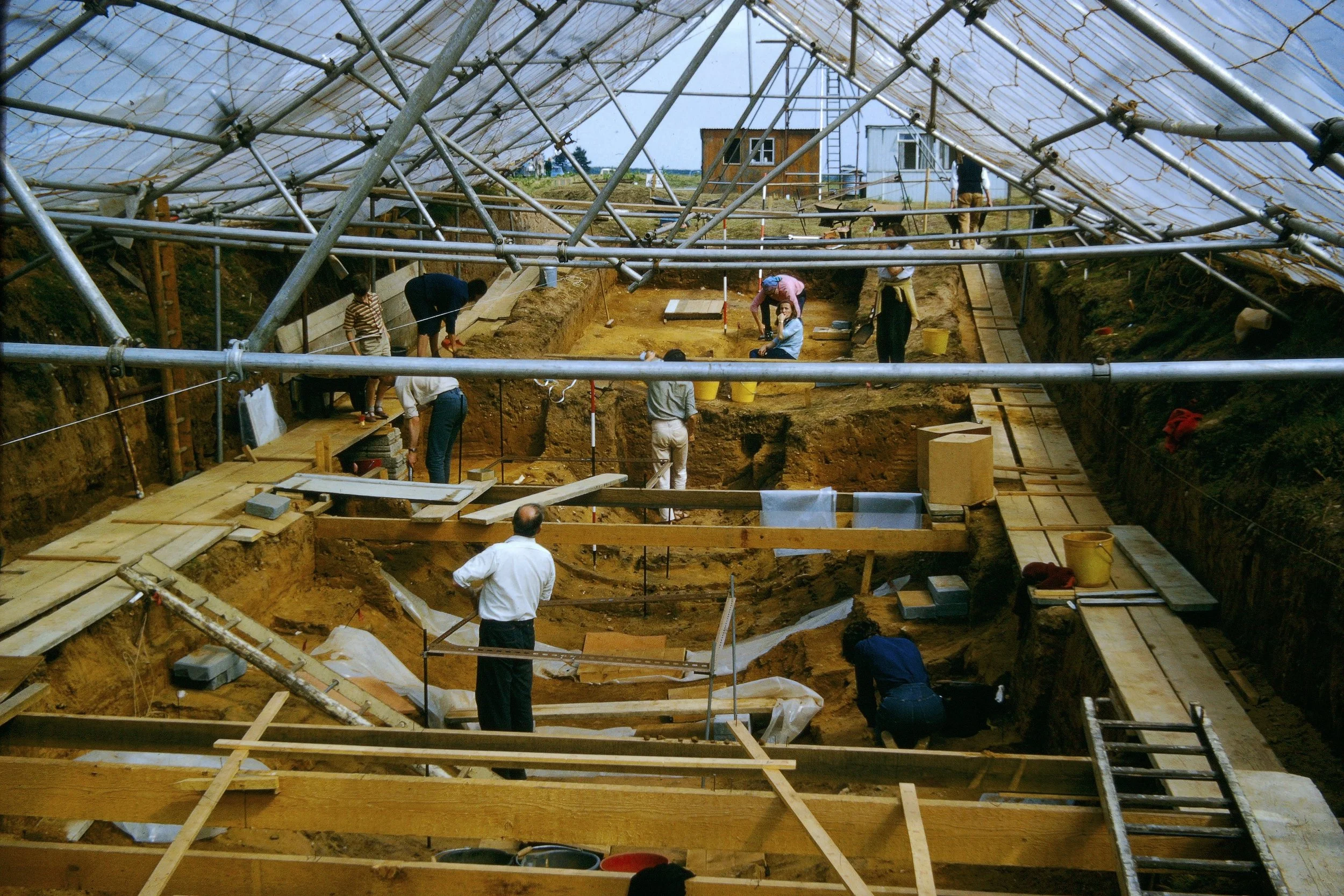
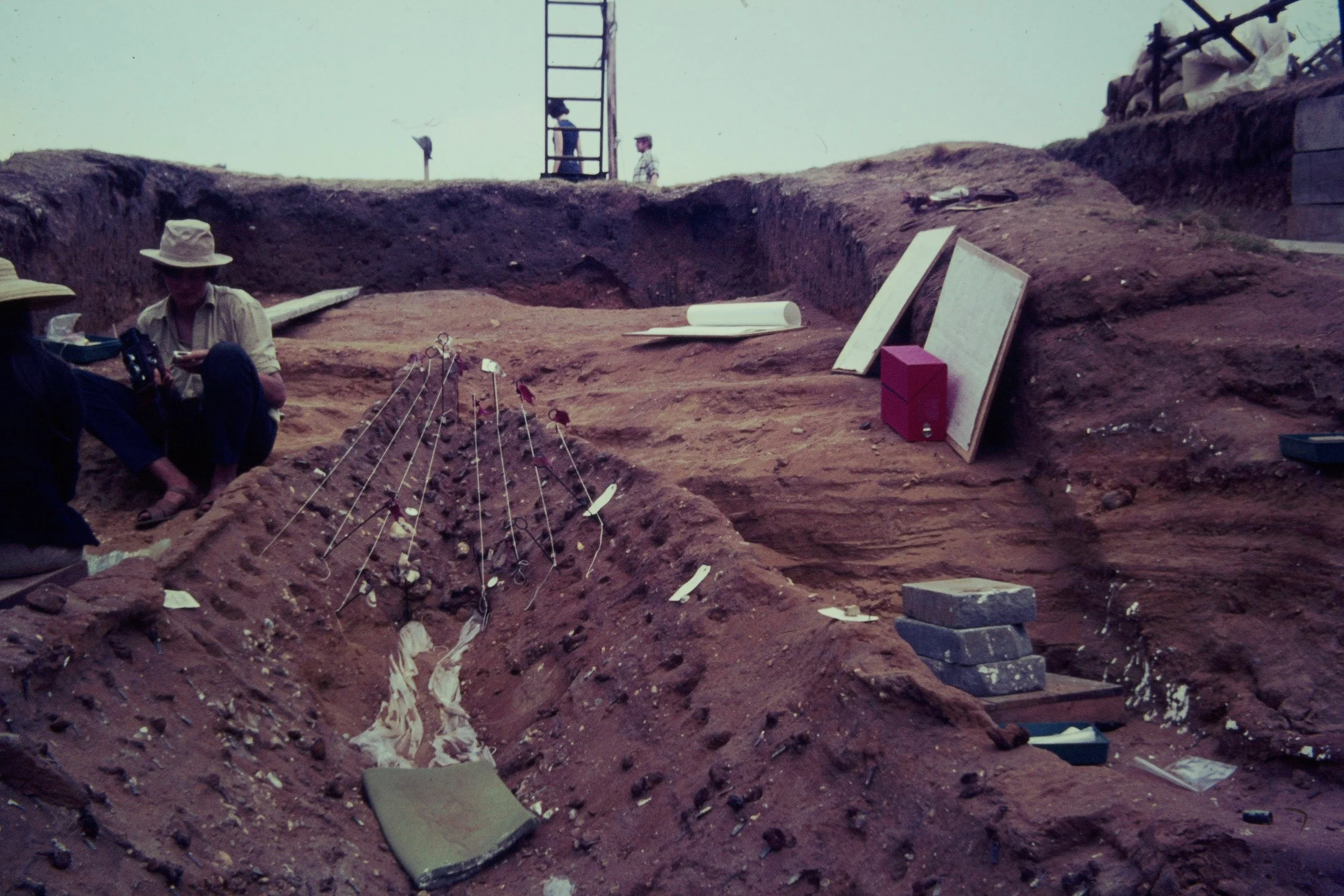
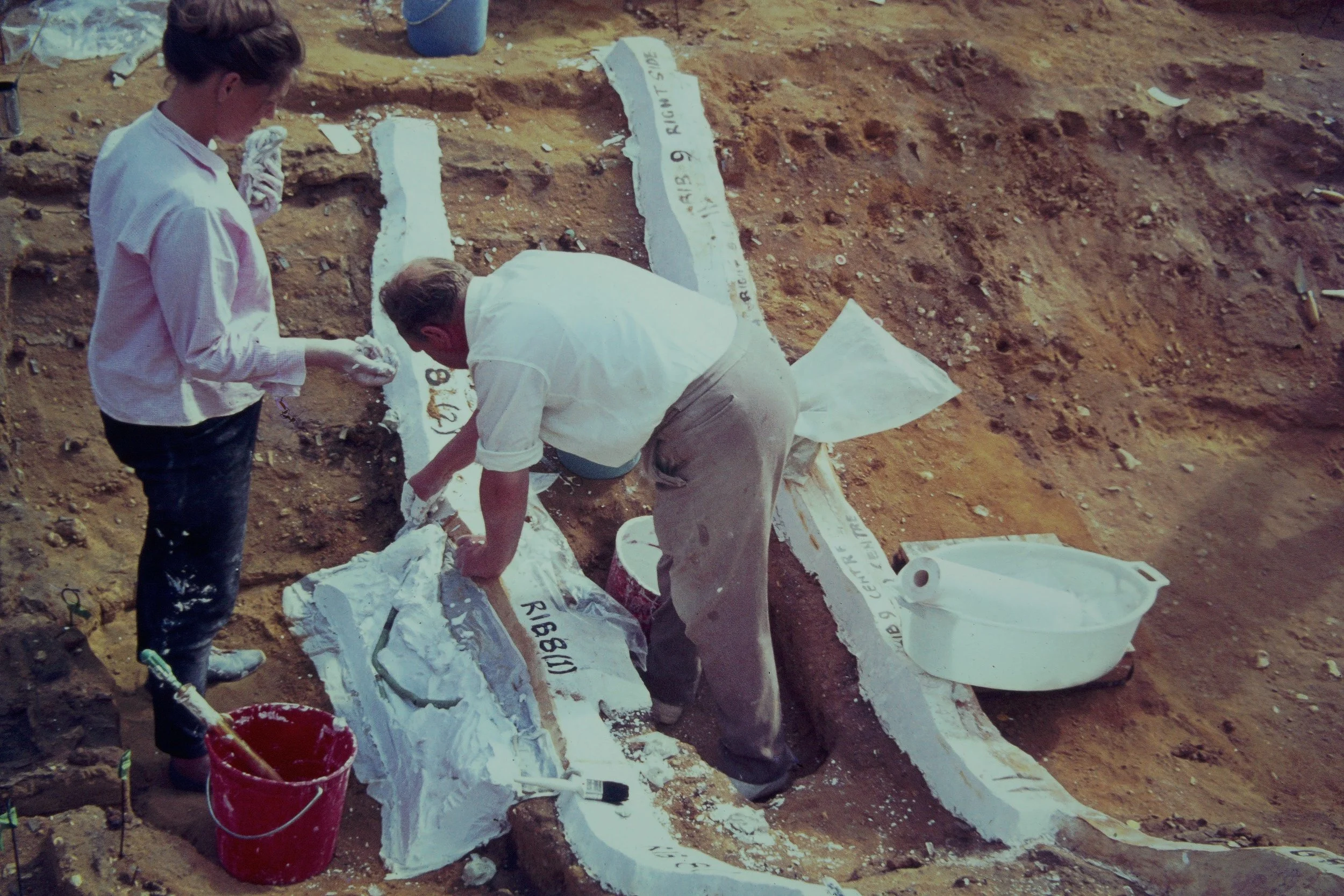
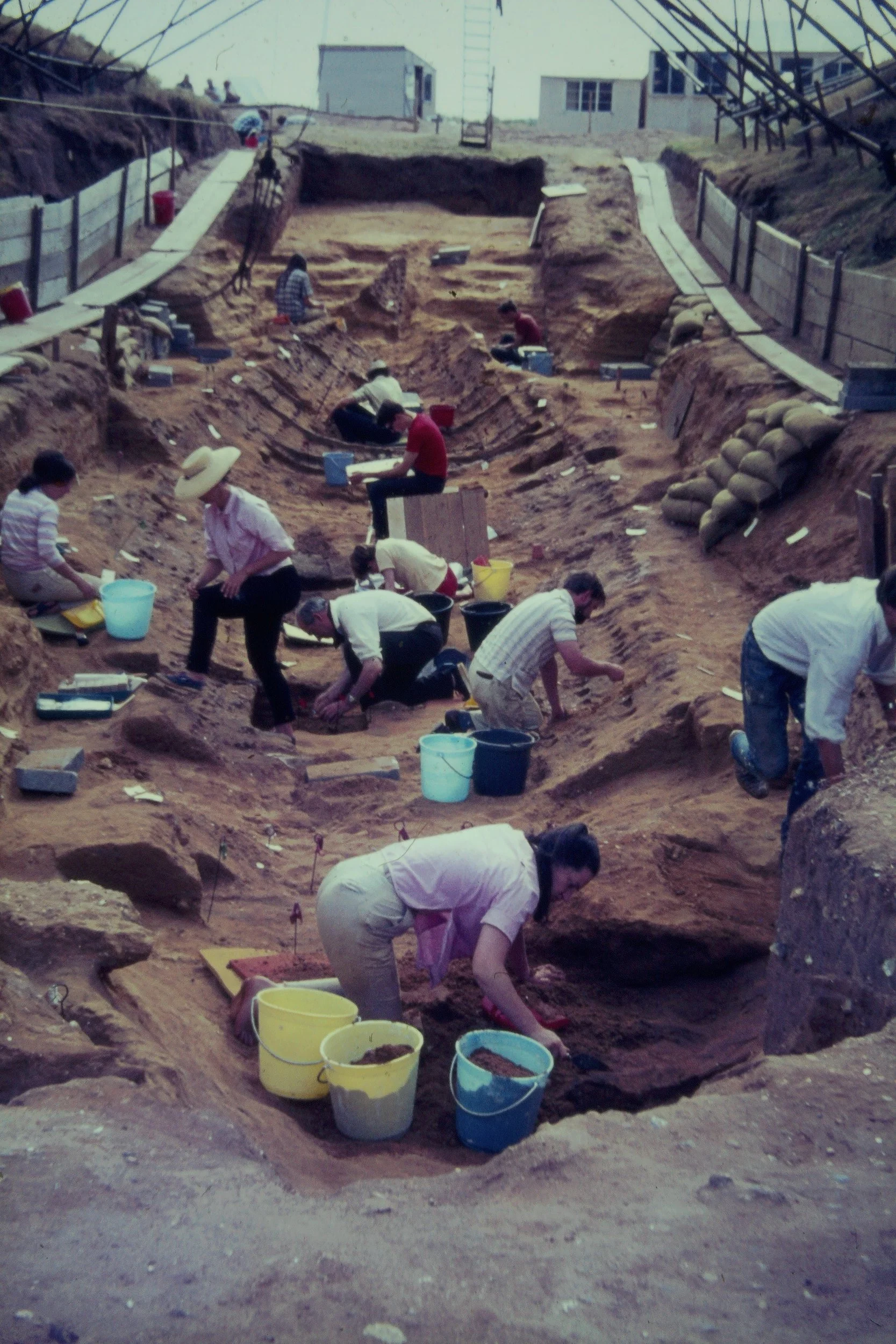
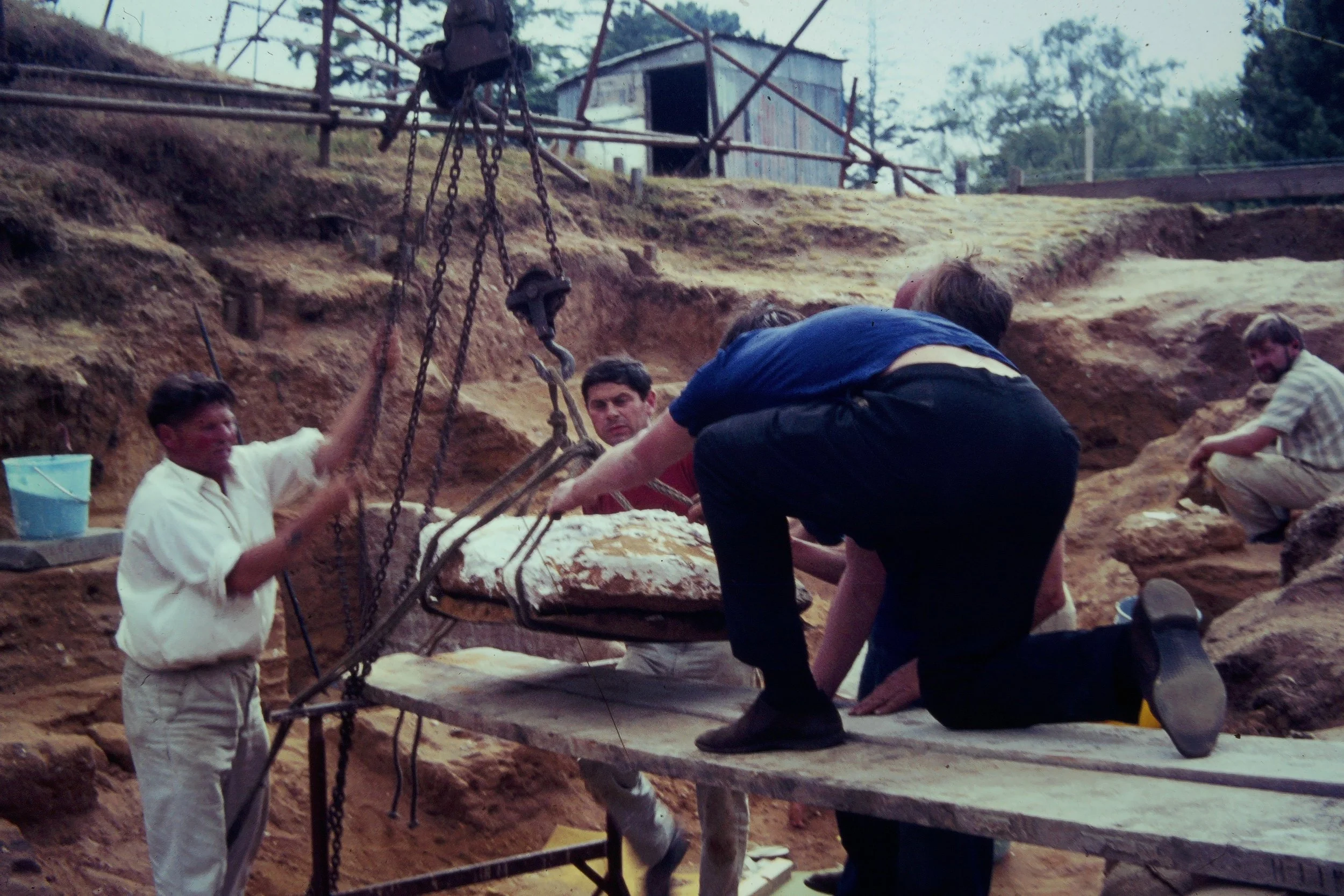
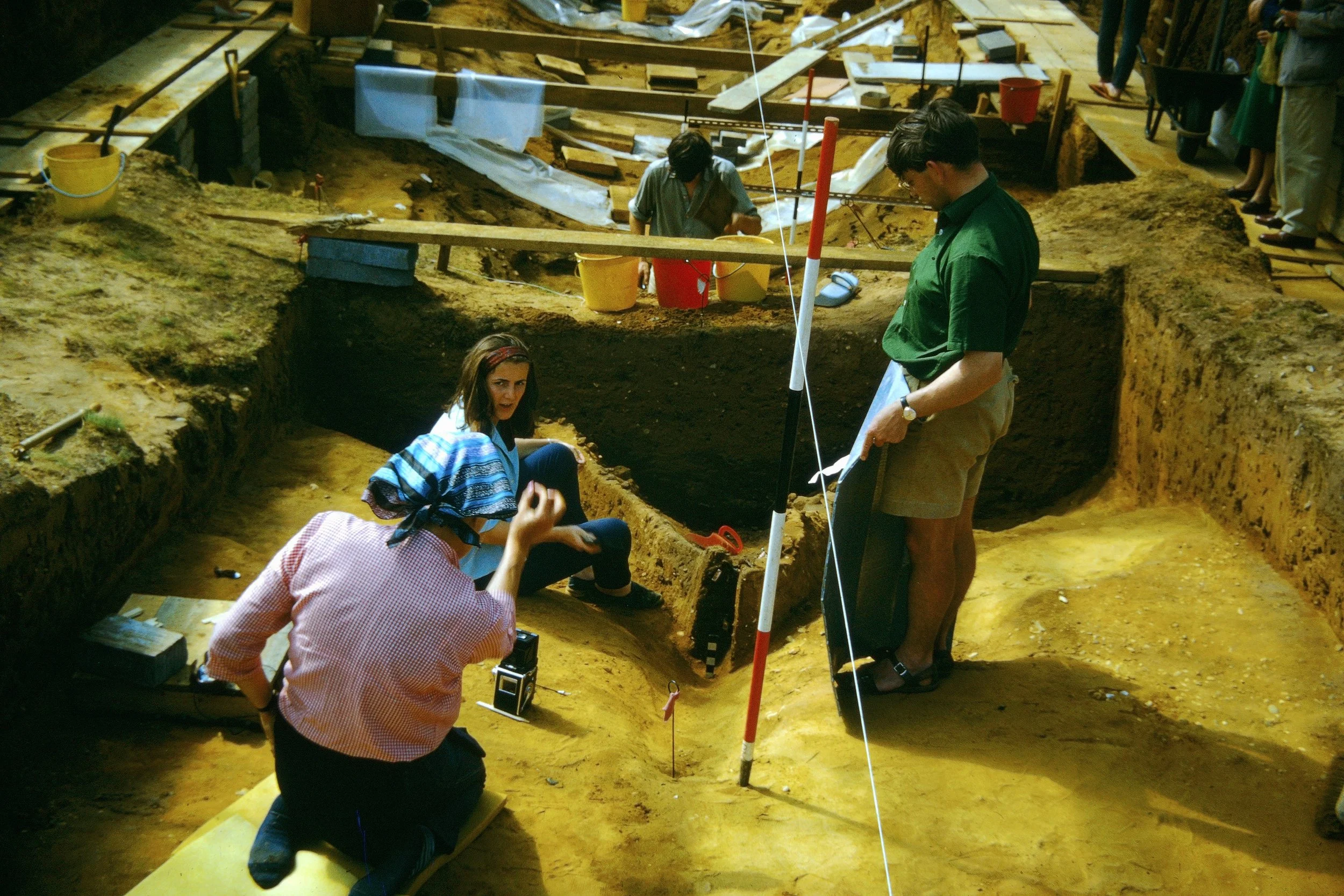
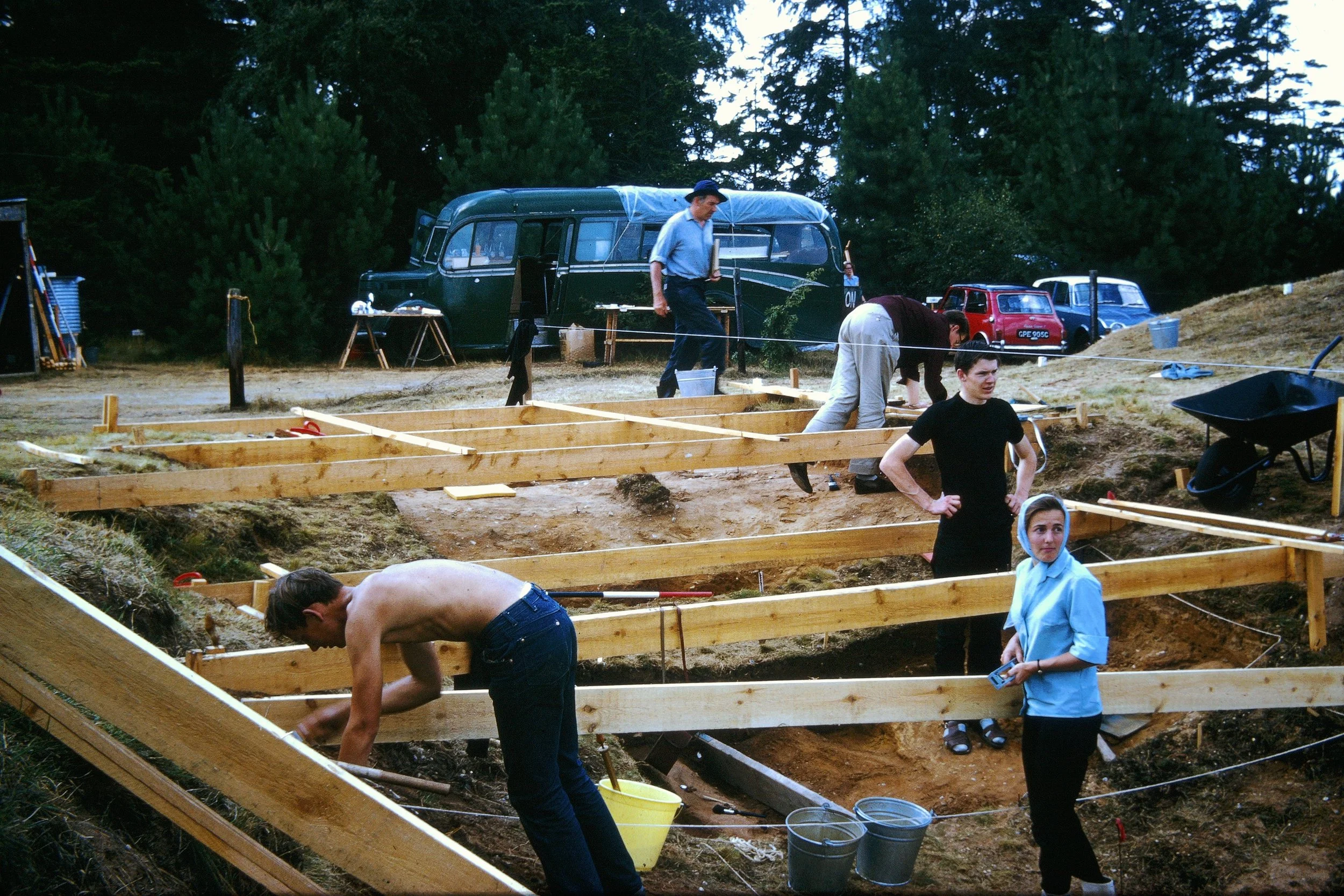
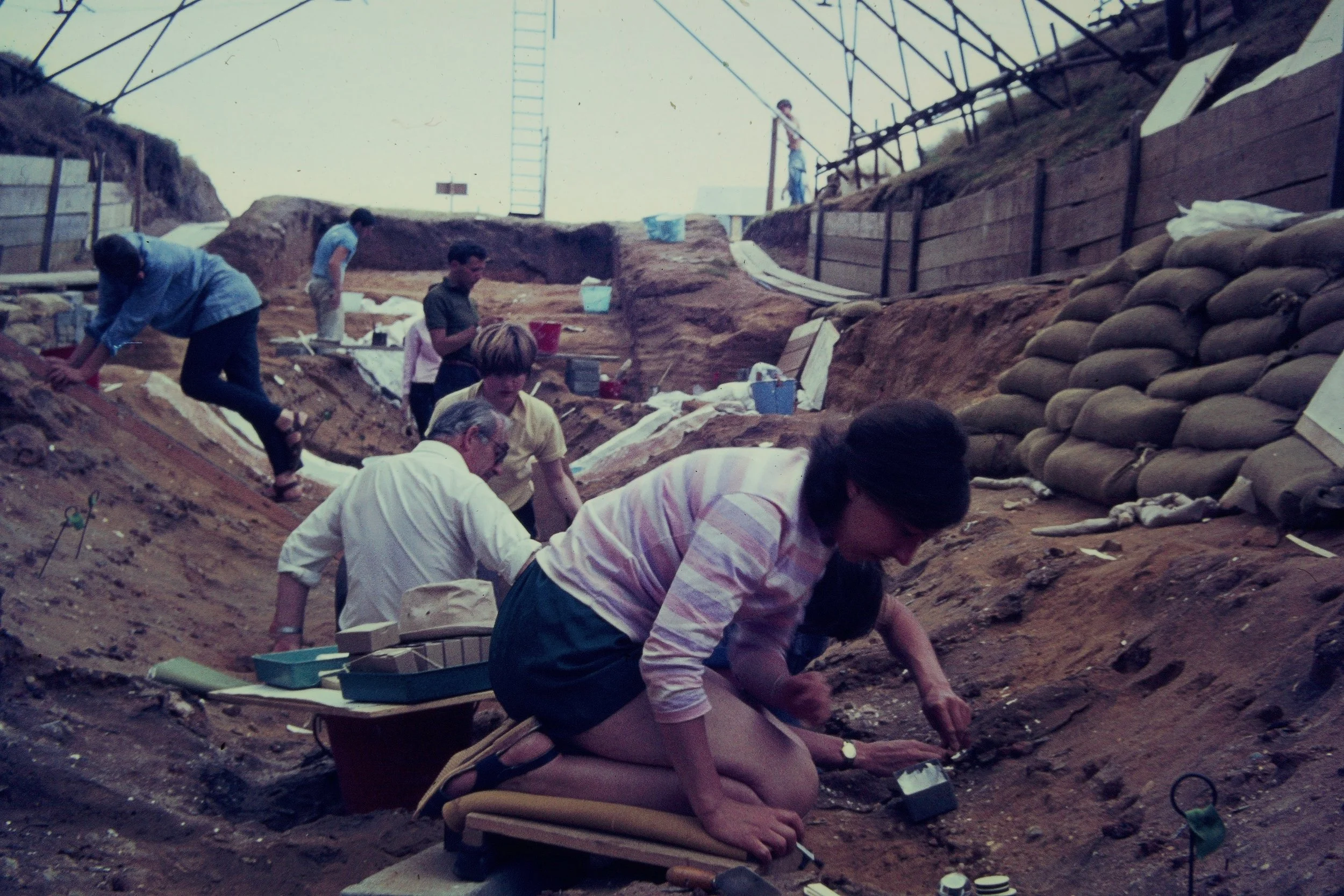
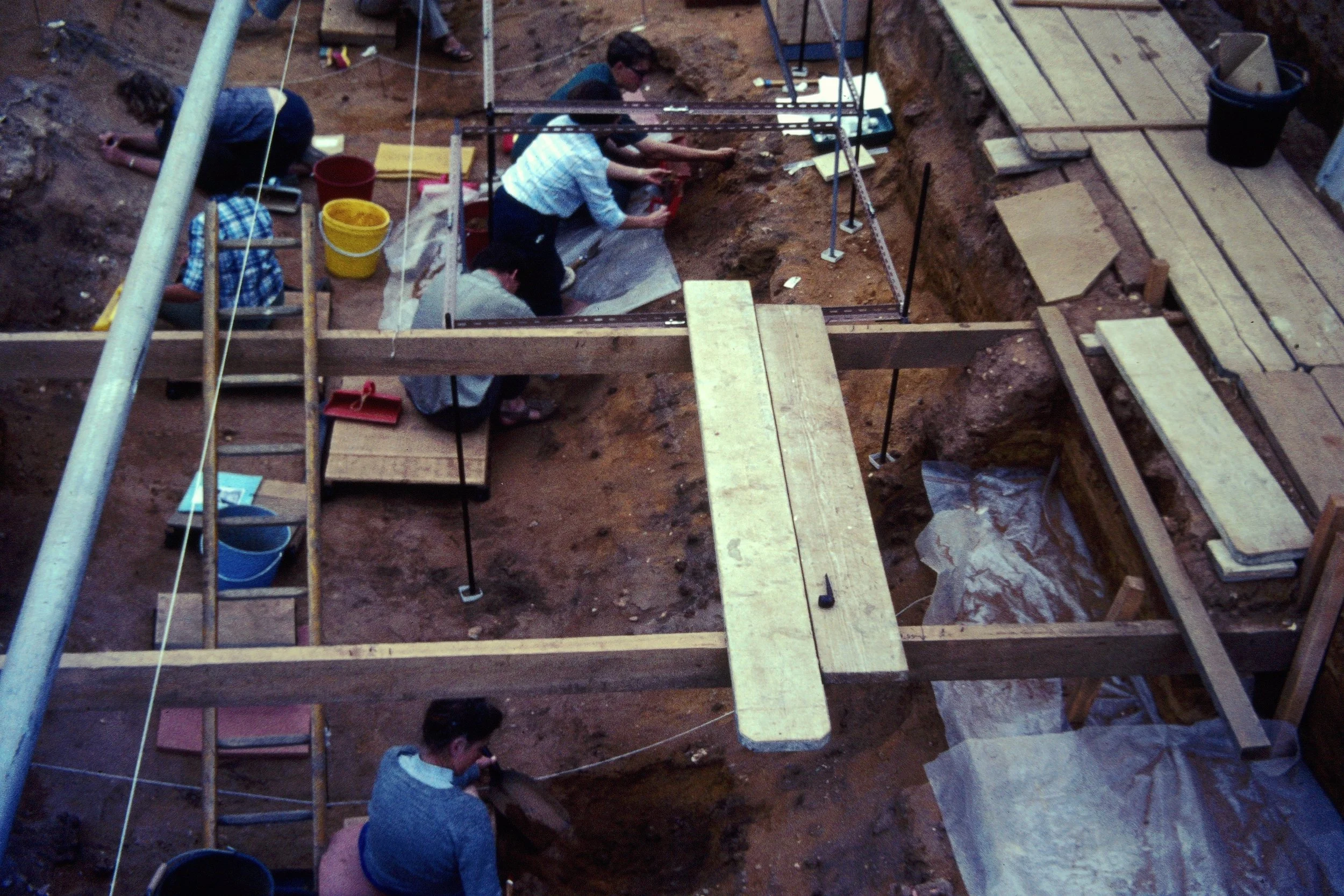
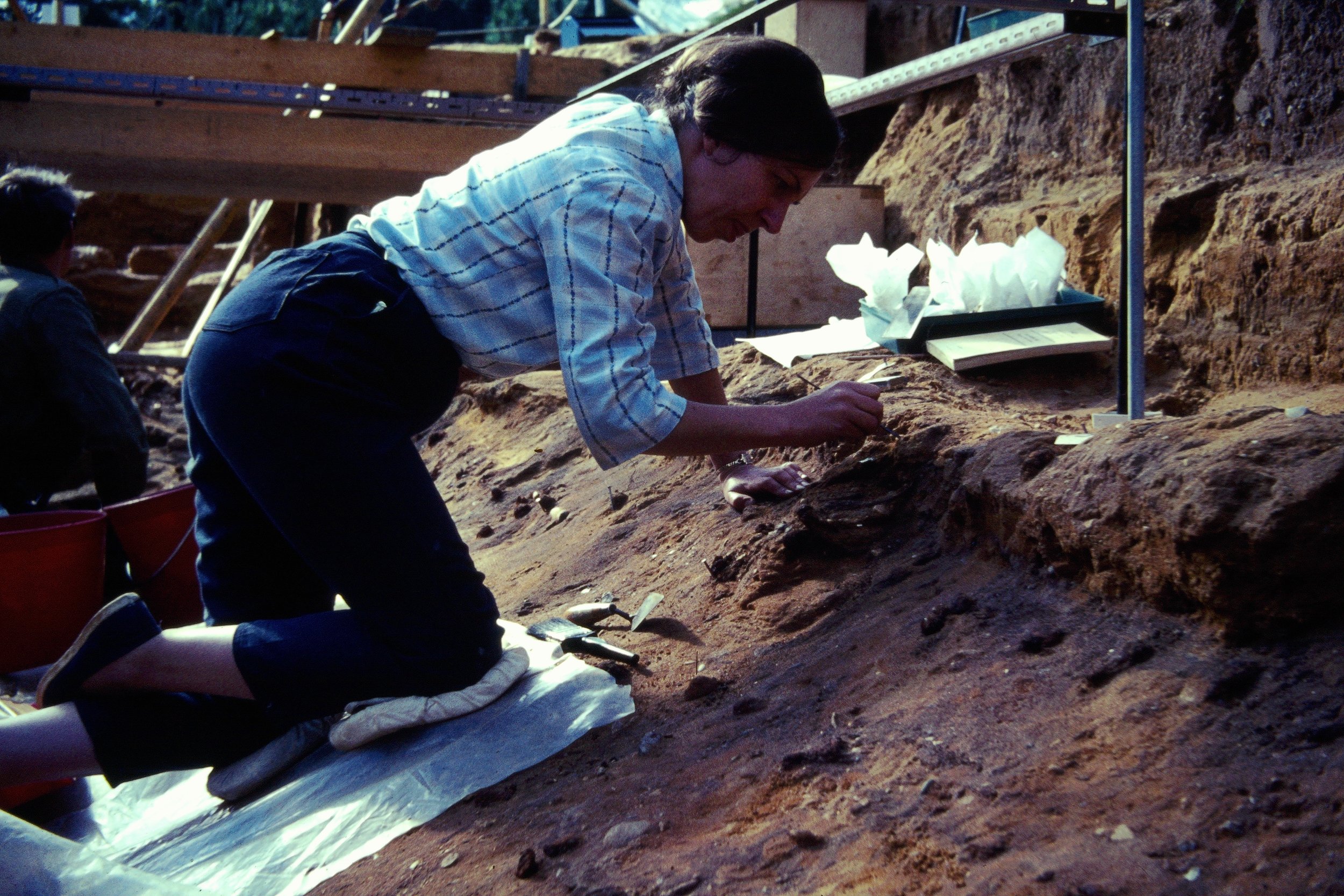
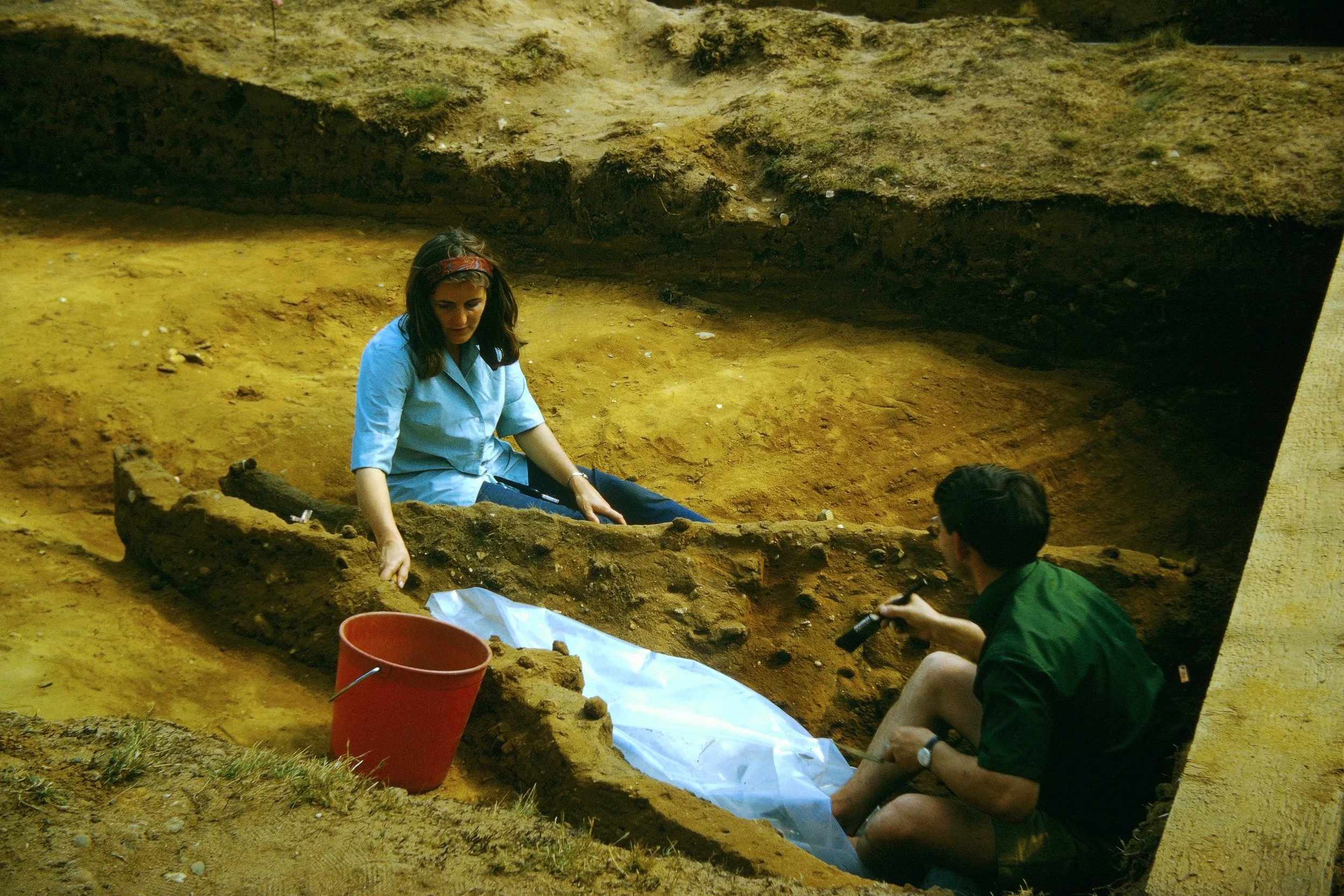
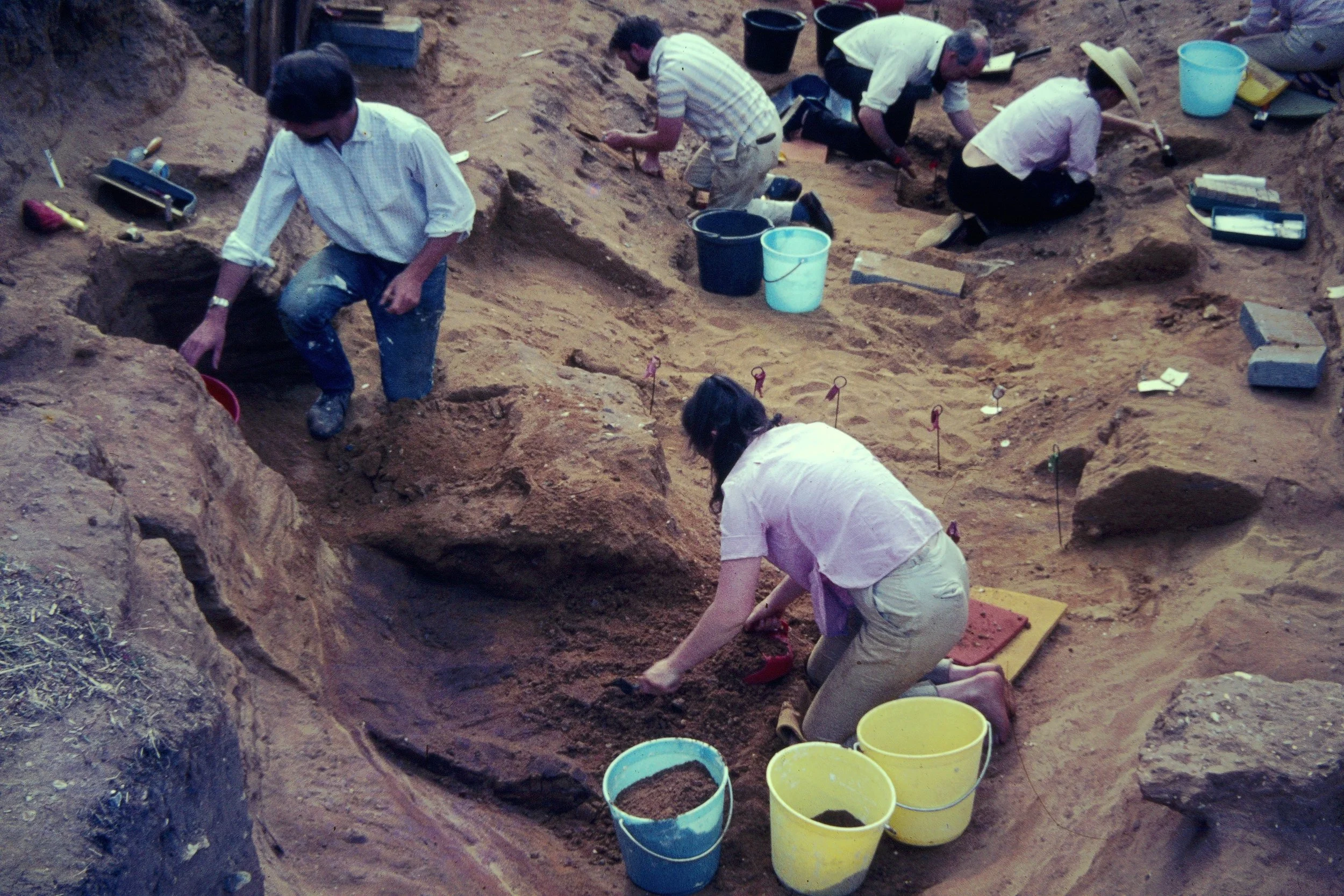
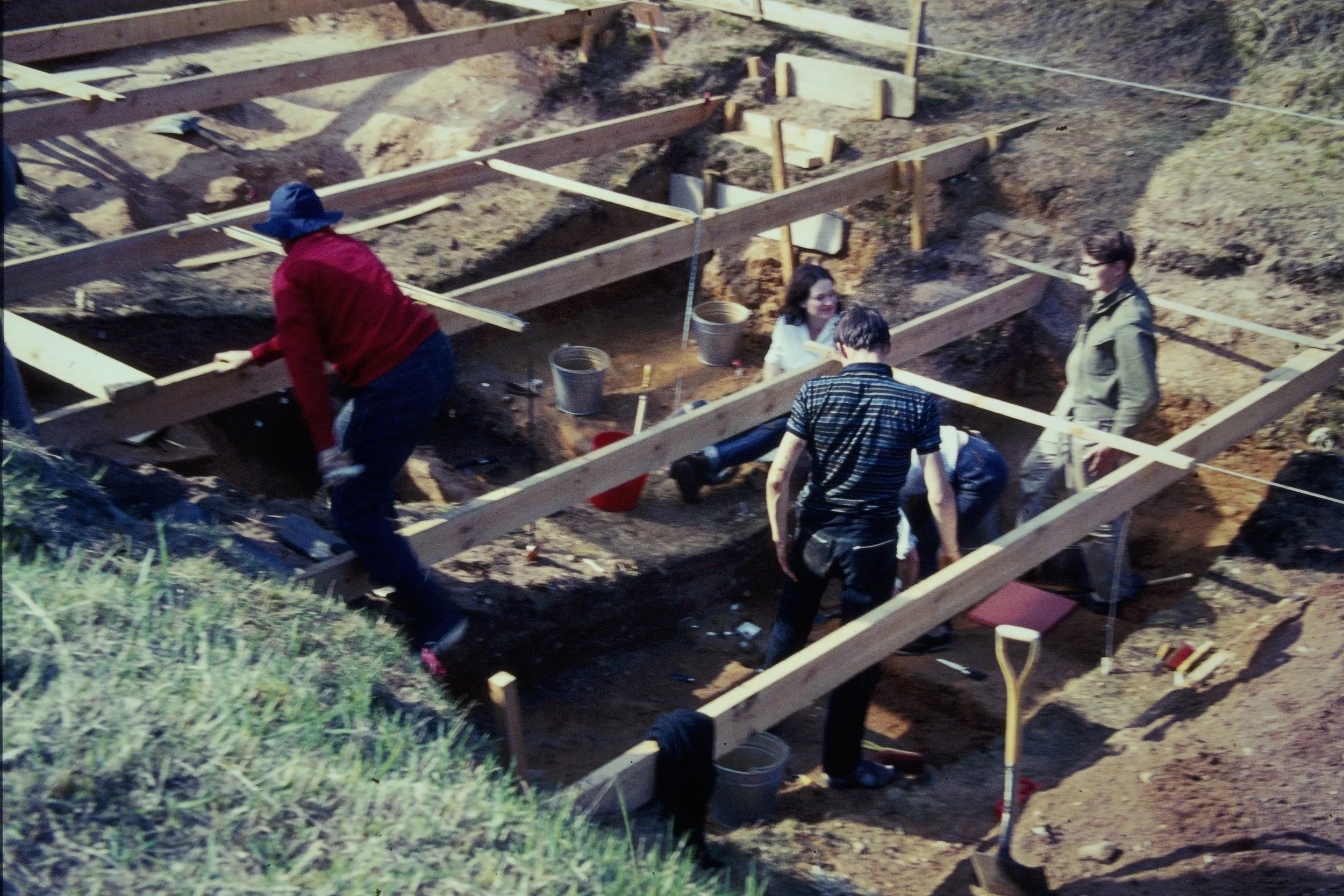
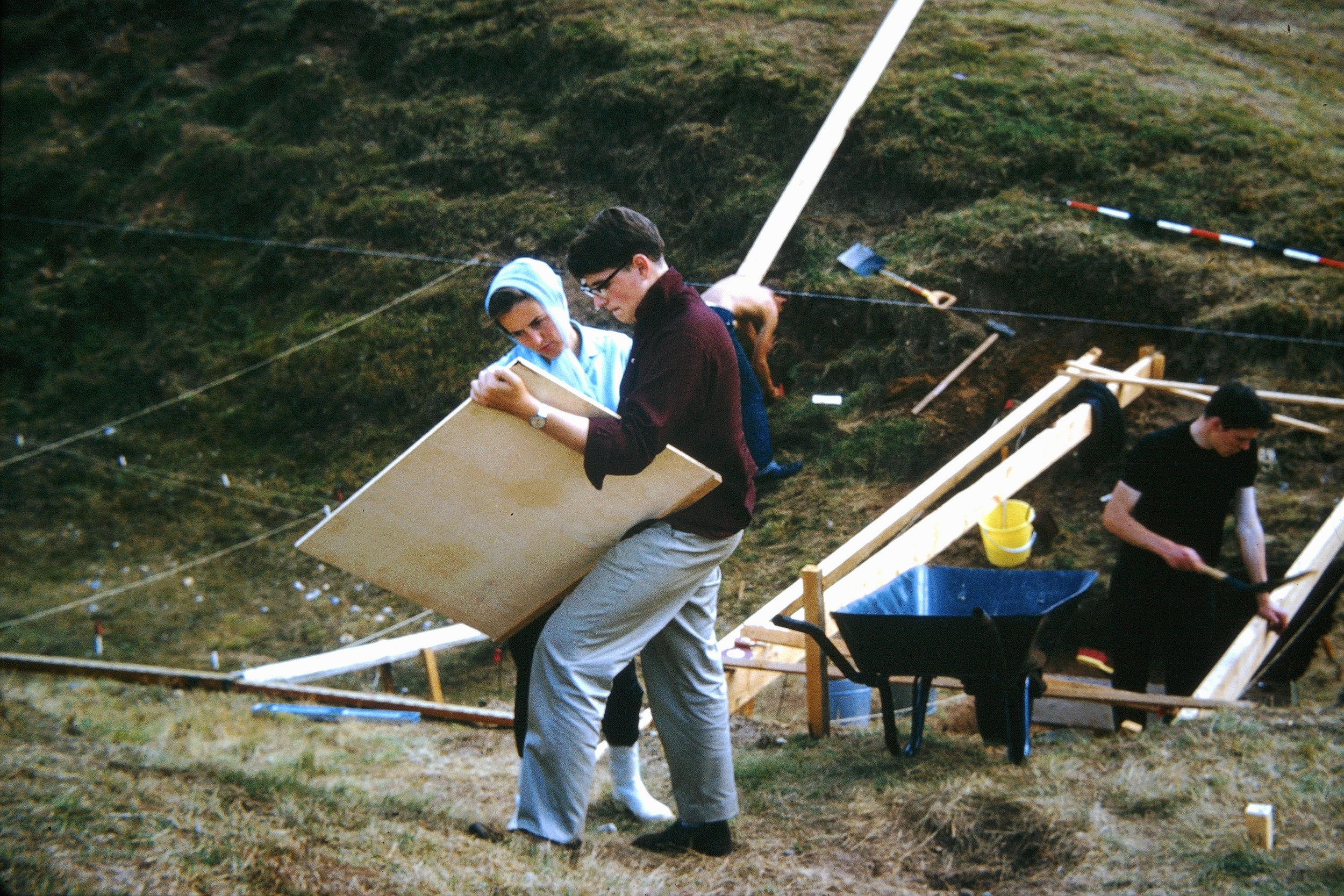
Valerie’s involvement in Sutton Hoo began in 1964, when, after joining the Department of British and Medieval Antiquities, she was tasked by Rupert Bruce-Mitford with setting up the Sutton Hoo research programme (an annexe of the British Museum), alongside the re-excavation of the ship impression, which would begin the following year in 1965.
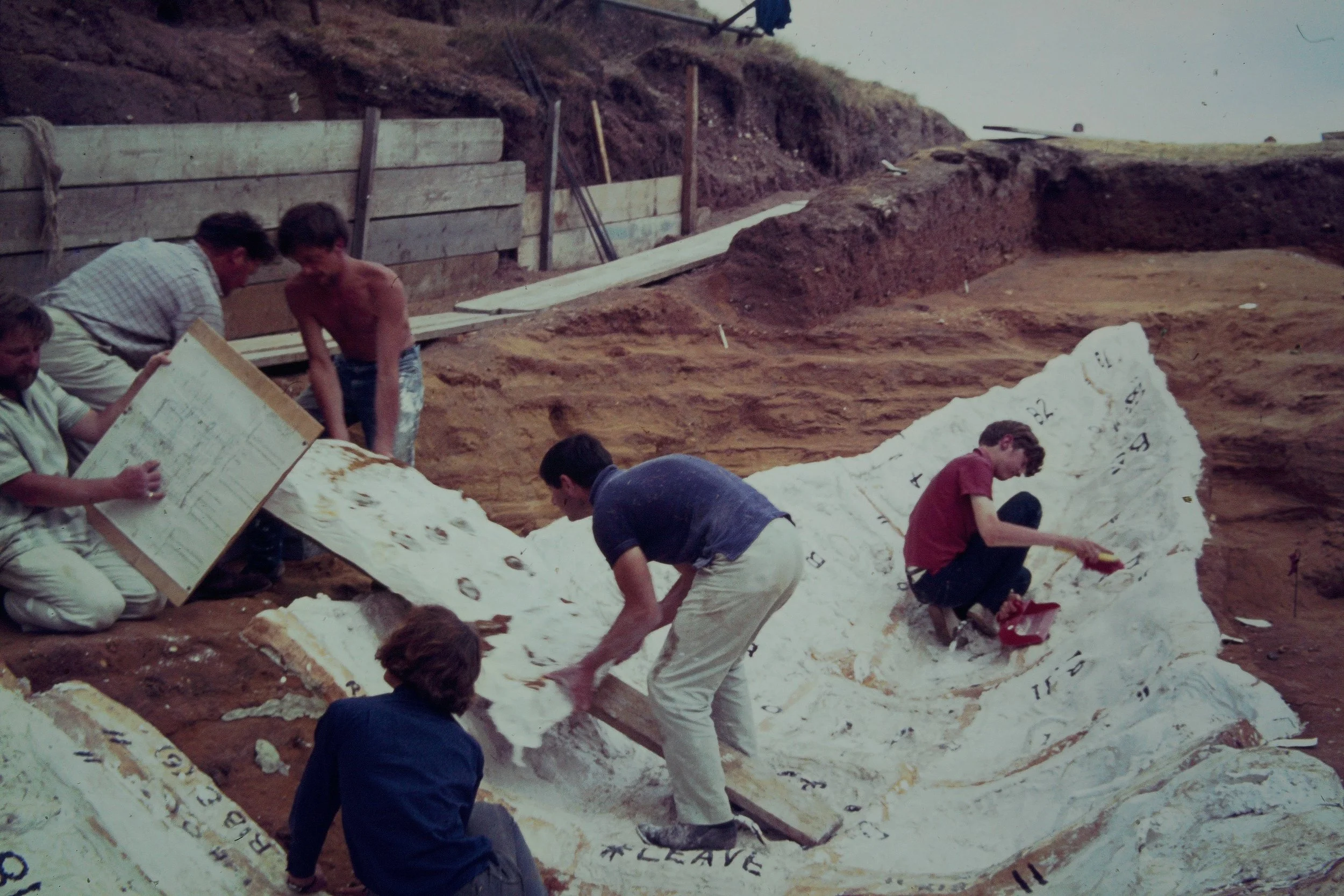
She also took part in the British Museum’s mission to address the issue of the ‘incompleteness of the contemporary record of the ship’, and the creation of an archaeological plan of the remains of the ship’s hull.
Her work also included the reconstruction of a large cauldron, complex chain-work, and of iconic objects, such as the lyre, iron ‘stand’, and ‘whetstone’.
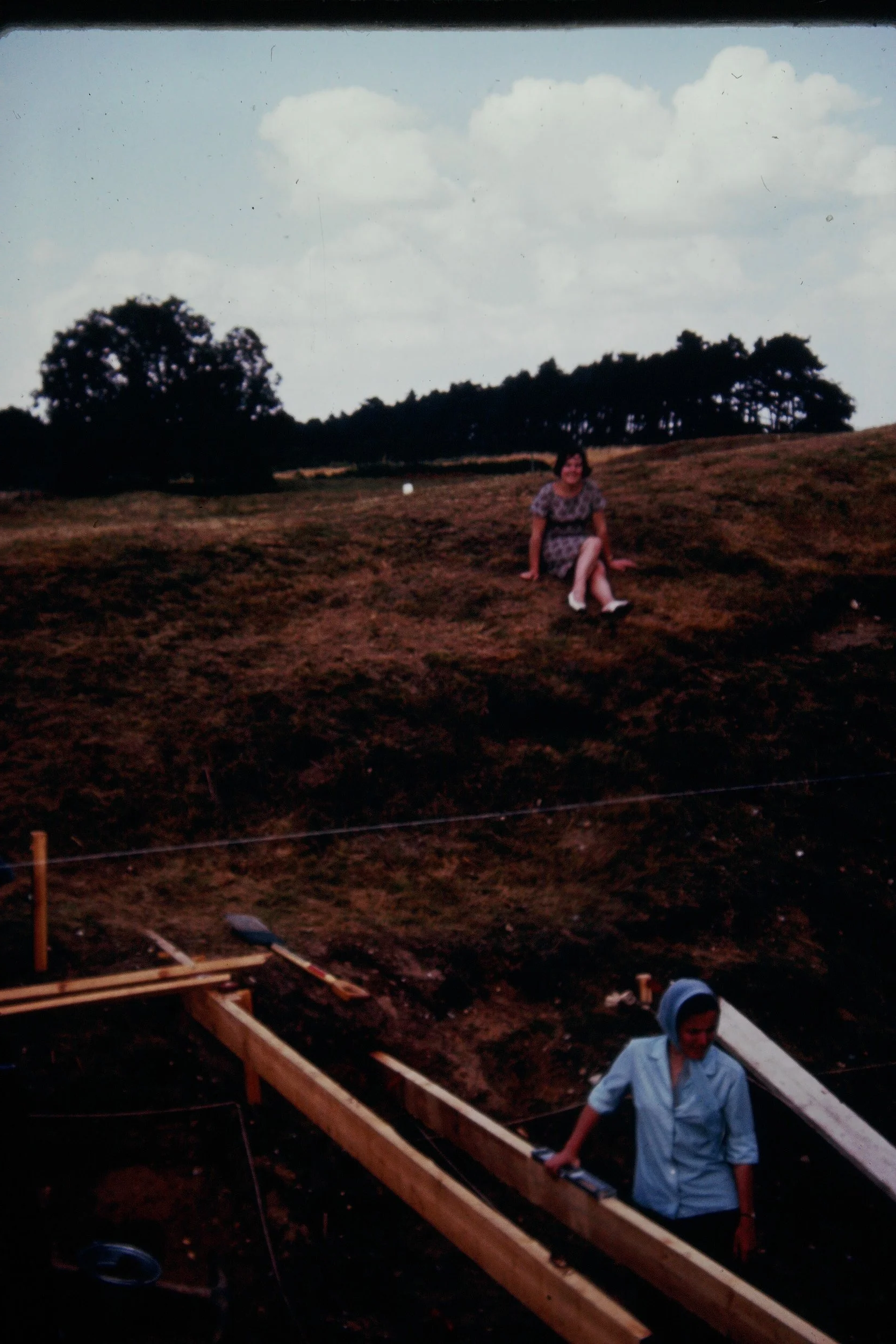
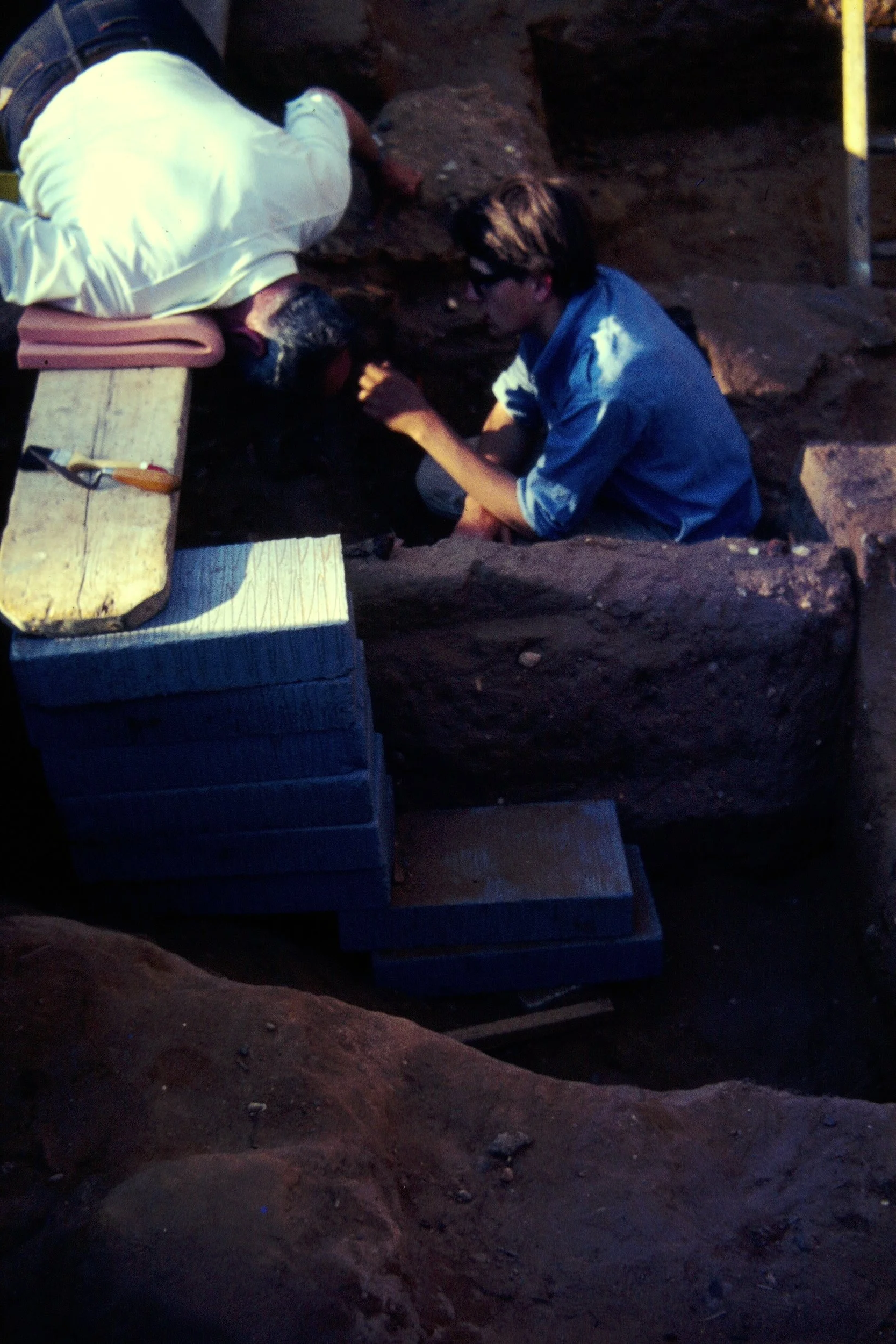
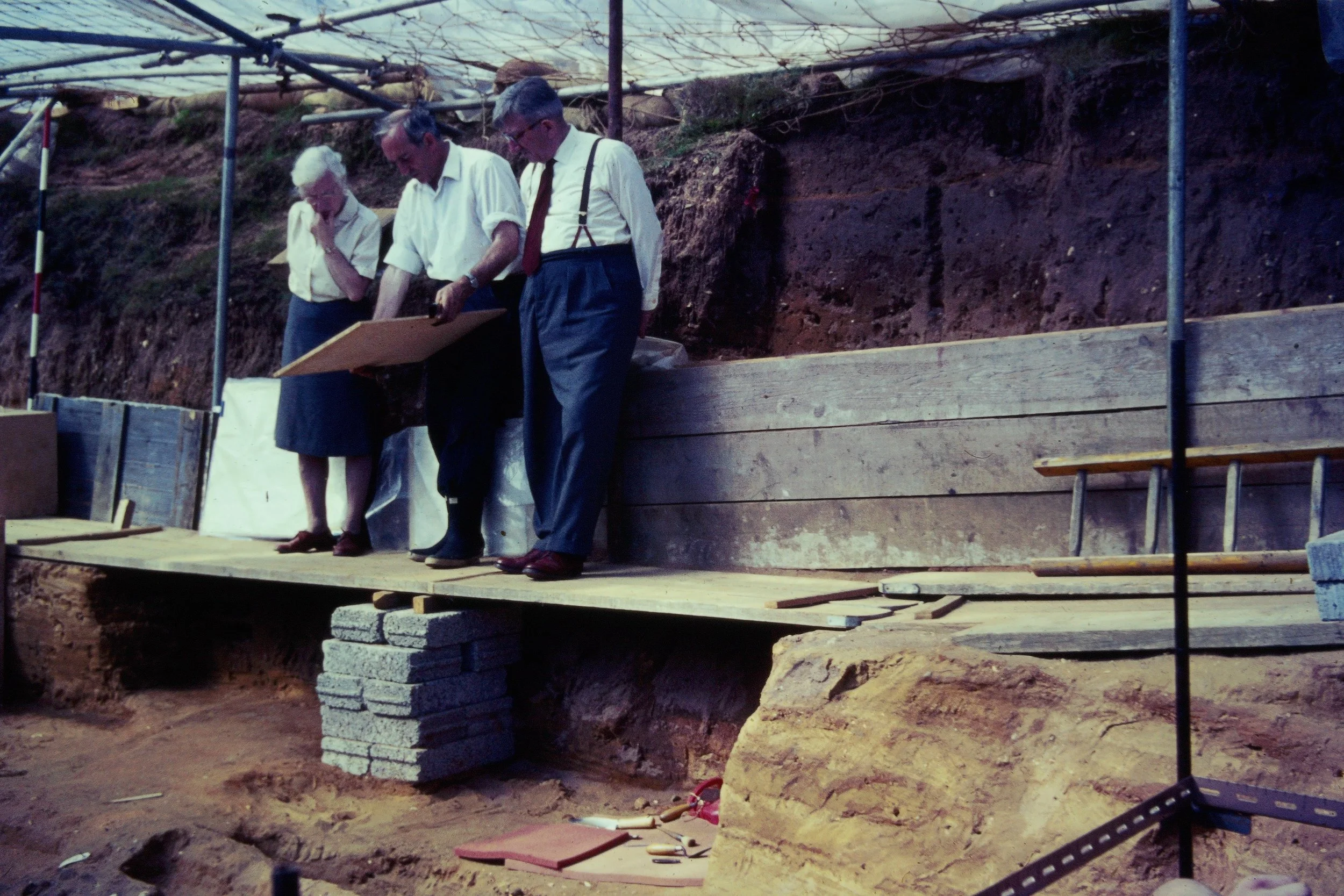
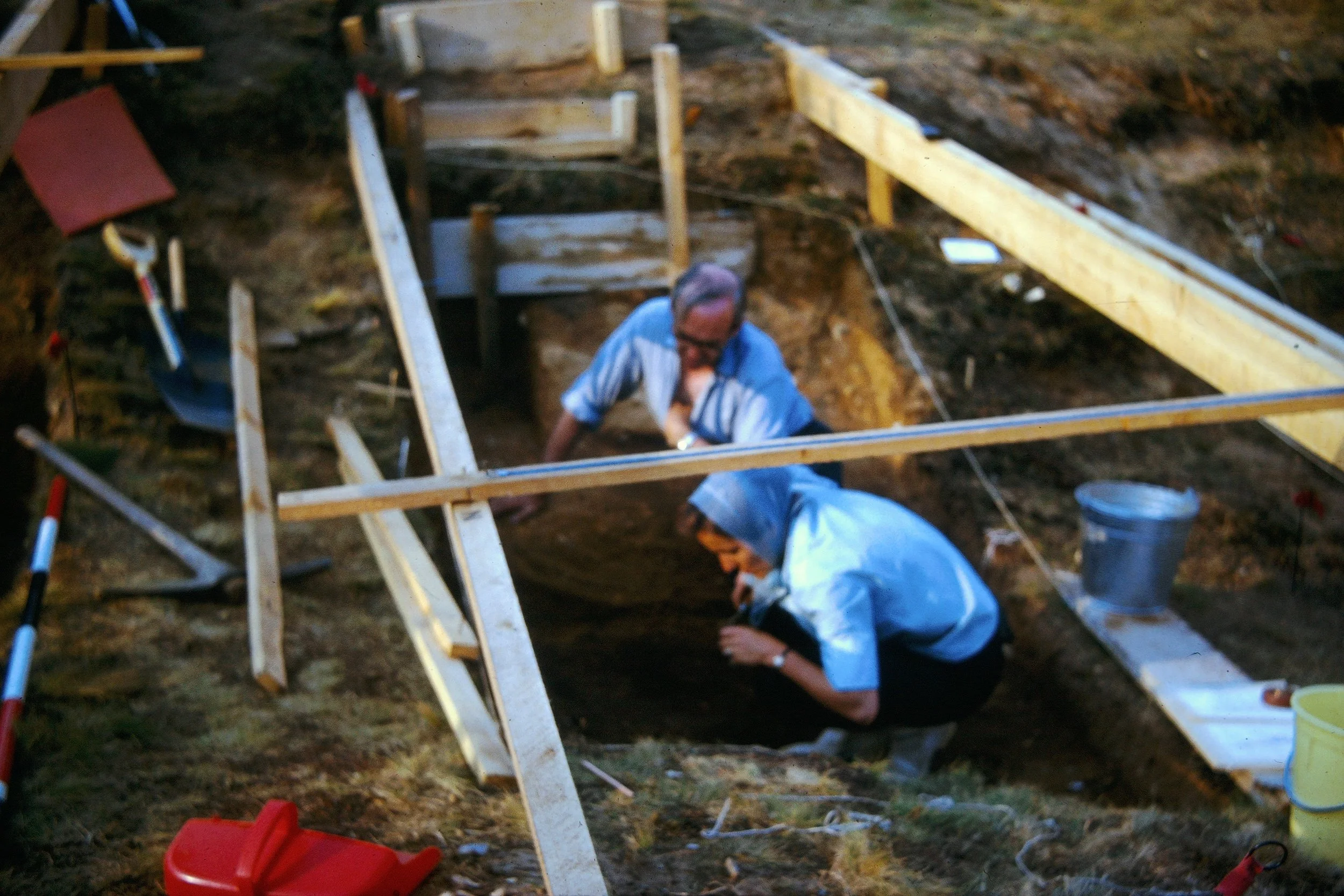
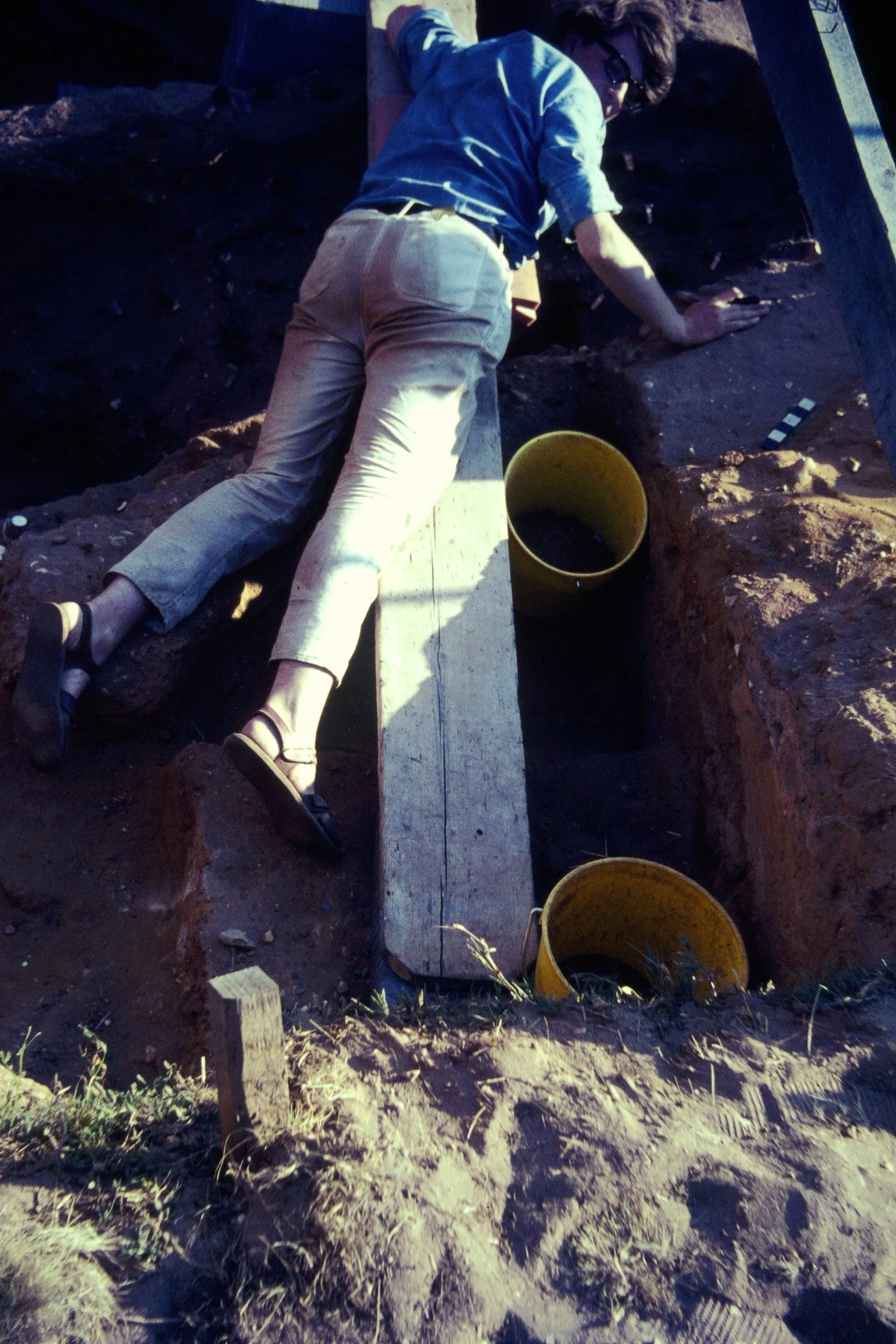
Image of Valerie (in blue shirt) at Sutton Hoo from her personal archive. © Valerie Fenwick CC BY-NC
SUTTON HOO: RE-IMAGING THE SHIP AND CHAMBER, The Antiquaries Journal, 2023.
Valerie Fenwick
INTRODUCTION
The name Sutton Hoo resonates with every student of the Anglo-Saxon period. The estate is now in the care of the National Trust and developed with a museum, restaurant and visitor centre. An elevated look-out enables the cemetery and its setting to be appreciated. The Edwardian building has been renamed Tranmer House and, with contemporary furnishings, provides the setting for owner Mrs Pretty’s excavation of four mounds in 1938–9. Now screened by a plantation, the site overlooks the River Deben. There is evidence of prehistoric cultivation, Anglo-Saxon flat graves and as many as eighteen tumuli, two of which contained clinker-built ships. The vessel beneath Mound 2 had been robbed. However, Mound 1 was found to contain the sandy outline and iron fastenings of a 27m-long ship, together with an intact assemblage of grave goods.
Even eighty-three years after its discovery by local archaeologist, Basil Brown, questions still remain to be satisfactorily answered, or have yet to be asked. Some theories persist, others have been discarded – only to be revived subsequently. A stimulus is provided by the best modern research. Of particular relevance is an earlier, richly-furnished ‘princely’ burial beneath a mound at Prittlewell in Essex. In addition, the digital survey of the ship below Mound 1 has adjusted the shape the buried hull assumed. This provides the basis for the following, and any future, reconstruction of the chamber built amidships.
EXCAVATION IN 1939
Something not obvious to the public and scholars is the incompleteness of the contemporary record of the ship, notwithstanding the best efforts of Charles Phillips. Having been asked to take over the excavation, he assembled within one month an exceptionally able team to deal with all aspects of what became a rescue operation.
The ship was Phillips’ priority. He prevailed upon the expert, Lt Cdr J K D Hutchison, to convince Mrs Pretty, the landowner, of the necessity for a professional survey and record of its impression. Afterwards the two men adjourned to the site for a lengthy discussion, sadly not recorded. The survey was necessarily postponed until the burial deposit had been removed. Twenty-seven days later Hutchison returned with his team from the Science Museum. Photographs show that Basil Brown assisted them in taking the lines. Meanwhile, accompanied by Phillips, Hutchison investigated its construction before returning to London and his post in Special Operations. The outbreak of war explains why it fell to one of Hutchison’s assistants to provide the ‘Provisional Plan’ for a temporary exhibition. A S Crosley’s inadequate grasp is patent in the article he published after Hutchison’s death, enabling him to claim sole credit. None of the original data survived. For this reason, two aims of the British Museum’s 1960s re-excavation of the subsequently war-damaged ship were to address outstanding problems with the provisional record and to create an archaeological plan of the remains of the hull.
RE-EXCAVATION 1965–7
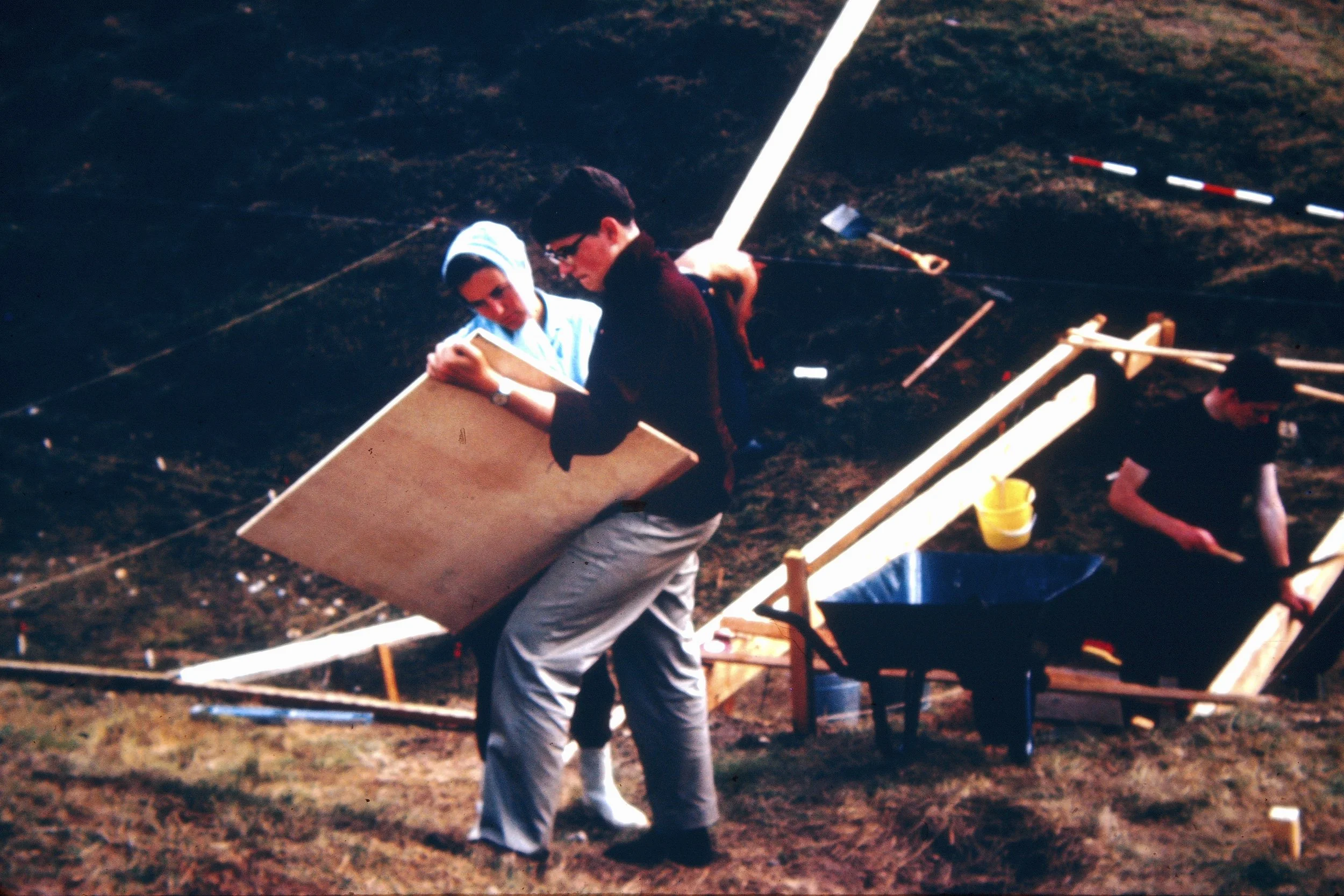
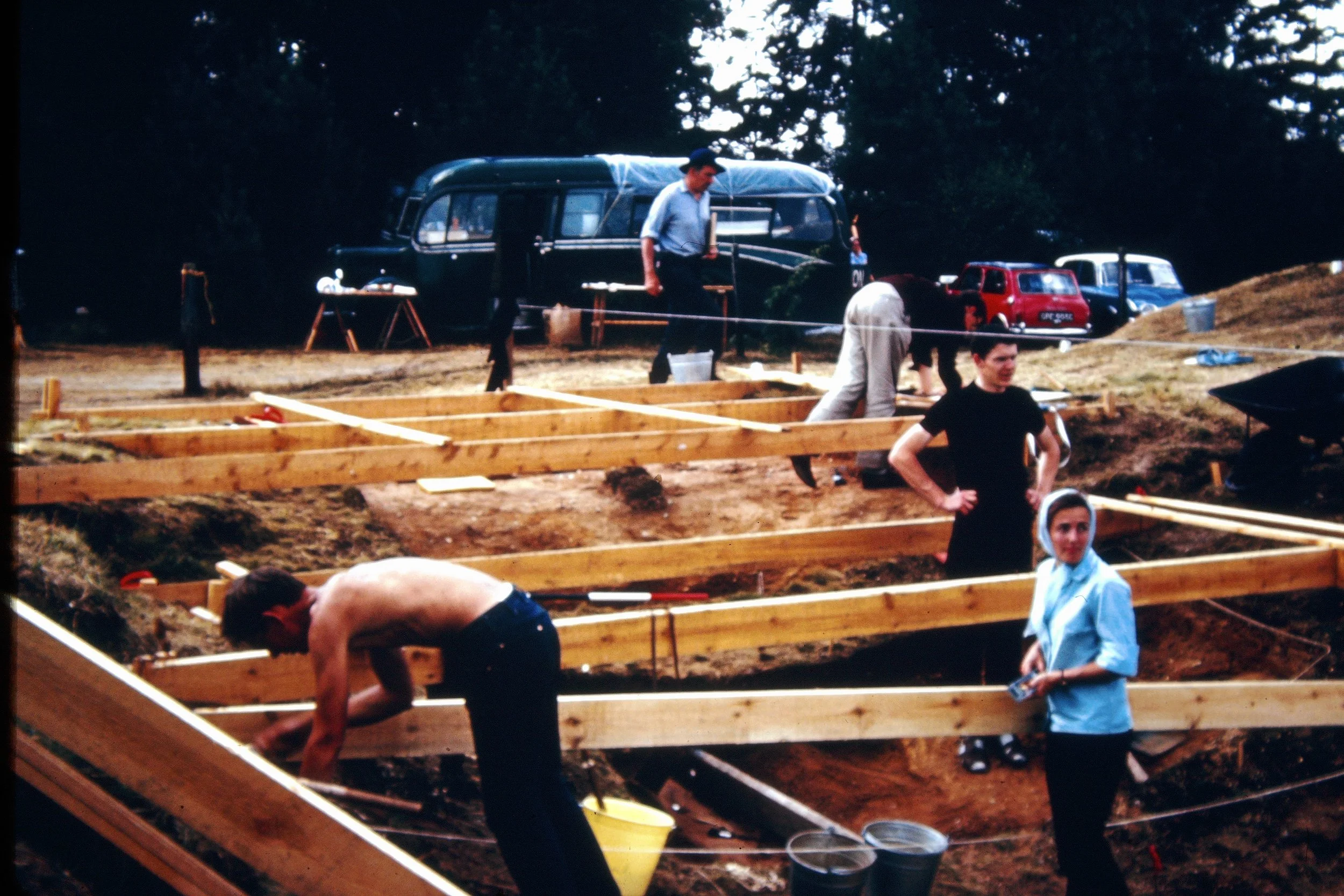
The author’s involvement in Sutton Hoo began in 1964. Upon joining the then huge Department of British and Medieval Antiquities, she was tasked by Rupert Bruce-Mitford with setting up, firstly, the Sutton Hoo research programme in an annexe of the British Museum, and the re-excavation of the ship impression to begin the following year .
In 1967 work on the definitive publication advanced with an enlarged staff including Angela Evans. The author’s investigation of the archaeology of the burial deposit resulted in a reconstruction of the large cauldron, the complex chainwork and new reconstructions of iconic objects – the lyre, iron ‘stand’ and ‘whetstone’. Perceptions and detail scattered throughout the three volumes remain difficult to access. A further volume, planned to synthesise conclusions of researchers and specialists, did not materialise. Digital publication is overdue. We are fortunate that Martin Carver’s subsequent excavation of other graves in the cemetery has placed Mound 1 in a wider immediate context. His published research has also provided an accessible interpretation of the burial. He is currently playing a leading role in the full-size reconstruction of the ship on a site opposite Sutton Hoo.
CONTINUE READING AT CAMBRIDGE UNIVERSITY PRESS.
The Antiquaries Journal , Volume 103 , October 2023 , pp. 36 - 62
DOI: https://doi.org/10.1017/S0003581523000021
© The Author(s), 2023. Published by Cambridge University Press on behalf of The Society of Antiquaries of London
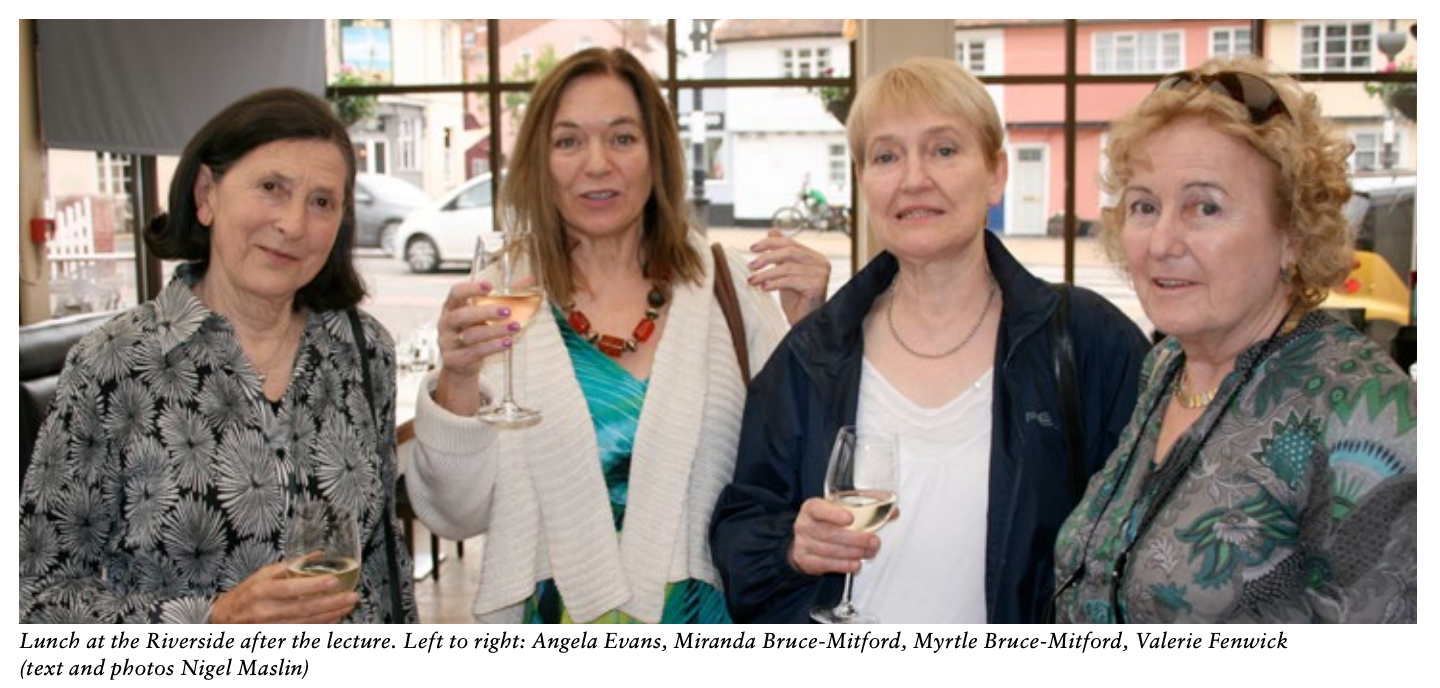
Image taken following the 2014 Basil Brown Memorial Lecture, with the Sutton Hoo Society.
ANOTHER SLANT ON THE SUTTON HOO STORY, Nautical Archaeology Society, 2024.
Valerie Fenwick
John Preston's novel, The Dig, and now the beautiful film based on it, has breathed renewed interest in Sutton Hoo. As soon as Covid-19 restrictions are lifted there will be a welcome influx of visitors. Naturally there will be questions about the film and the way the excavation is portrayed. As I knew the chief characters later in life and took a key part in the ship re-excavation and publication of the ship-burial, I thought to provide a few corrections for NAS readers.
Firstly, the film was based on the novel by John Preston, who admitted to having taken some liberties for dramatic affect. The novel was unlikely to change public perception of the ship-burial excavation. It did not detract from the story that he telescoped the 1938 and 1939 excavations, omitted the site photographer (OGS Crawford) – replacing him with a fictitious relative of Mrs Pretty, made numerous other 'adjustments' and omitted the survey of the ship.
The film's superbly created characters have replaced the original, perhaps less colourful, people. Incidents were necessarily created to add a bit of drama. Examples are: Basil Brown buried by a landslide; his touching friendship with nine-year-old Robert Pretty; the use of ferries and long cycle rides; the plane diving overhead to crash into the Deben; the marital mismatch of the Piggotts and hint of unfaithfulness and homosexuality.
The omission of the last part of the excavation – the ship itself (also left out of the book) – has skewed the roles of Basil Brown and Charles Phillips. It would have shown that Basil Brown (officially the latter's assistant) did continue to excavate the rest of the ship. The photographic record shows both of them working alongside the Science Museum survey team. To Phillips the ship was the most important and interesting find and Basil's achievement was to have uncovered it carefully.
There was indeed a clash of personalities on the site but it emanated from Ipswich Museum. Basil records his problems with an unnamed member of its staff who tried to oust him and take over his Sutton Hoo excavation the previous year. When the intact ship-burial was found Reid Moir and Maynard were desperate to ensure that the finds went to their museum. Basil was placed in a difficult position and sensibly insisted that he was working for Mrs Pretty.
What ensued was another clash, this time between the generations, Reid Moir, Guy Maynard and Basil Brown, in their fifties and sixties, were all old guard, a generation older than the new breed of archaeologists, who arrived with skills now formally taught in Mortimer Wheeler's fledgling Institute of Archaeology. The film cannot show this because the key actors are the wrong age. Grimes and Piggott were in their twenties, without university education, brilliant, but not the middle-aged academics portrayed. Phillips was only in his thirties with a track-record of outstanding excavation. All had come from modest backgrounds and class was not a factor.
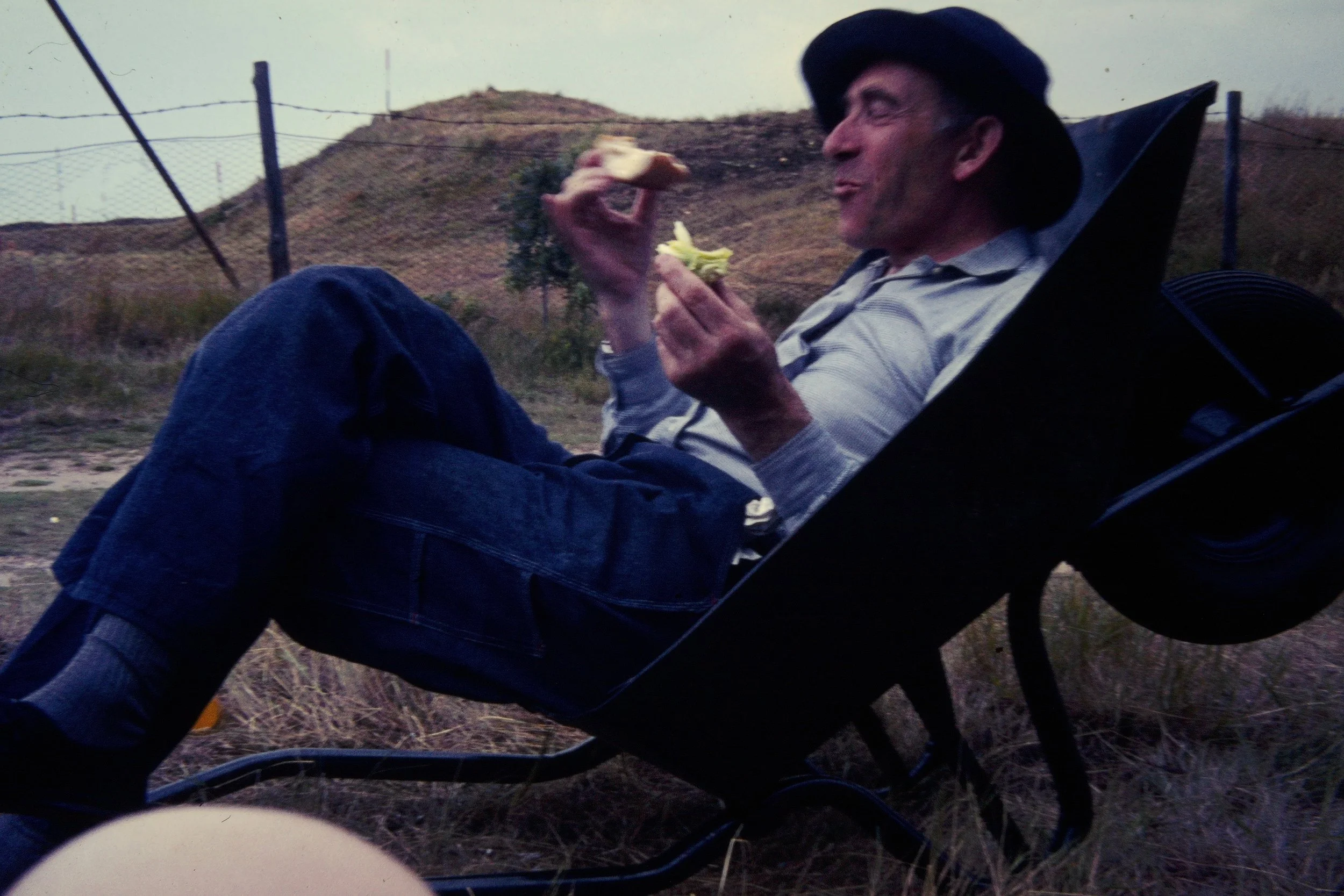
Mrs Pretty had already died when the British Museum prepared to re-excavate Mound I in 1964. I took Basil Brown to the site (providing a photo opportunity for the Woodbridge Reporter), and we remained friends until he died. He expressed no bitterness at the way things had turned out and had been recognised with a special government pension. Basil was a lone excavator (as he termed himself), and fully aware that he lacked the skills to deal with the burial chamber deposit or record the ship impression. The film and Ralph Fiennes' sensitive portrayal is a wonderful tribute to him, but it should not obscure the debt we owe to Charles Phillips for his, inevitably unpopular, intervention to direct what had become a rescue operation.
READ THE ORIGINAL AT THE NAUTICAL ARCHAEOLOGY SOCIETY.
Photographs from Valerie Fenwick’s personal archive
© Valerie Fenwick CC BY-NC

Were you part of this project? Do you have any further information or photographs? Let us know using the form below or by emailing valeriesarchive@proton.me.