The World’s Largest Collection of Traditional and Vernacular Boats
The story of Valerie Fenwick’s rescue of twelve unique boats, and how they found their home in Gdansk, Poland
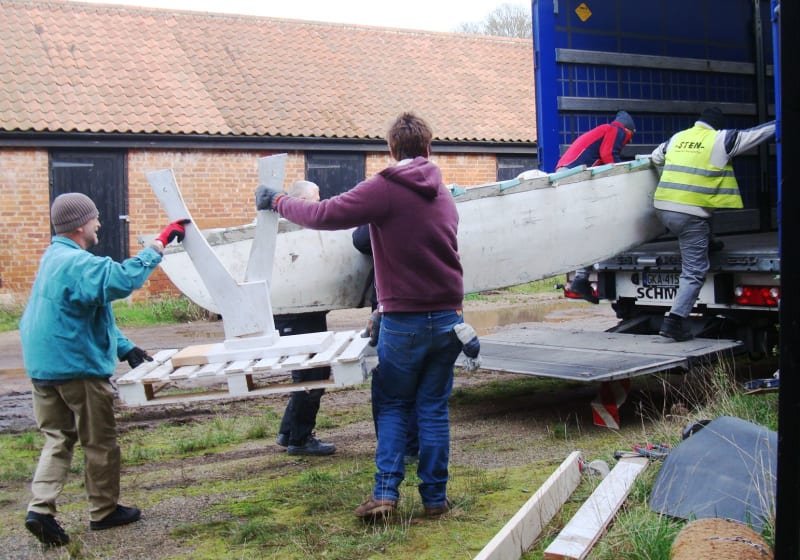
In 2017, after 48 years of operation, the Exeter Maritime Museum went into administration, and its collection of 270 ethnographic and classic boats was to be auctioned off online, with only 24 hours allowed to collect the lots. There was no intervention by the British Government, nor any maritime museum, to save the rare collection.
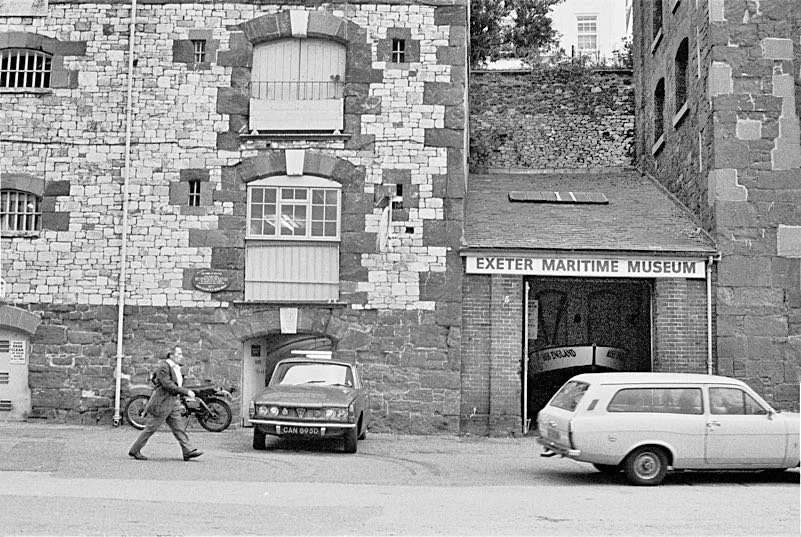
The entrance to the Exeter Maritime Museum, 1979
The crafts were auctioned off to private bidders, and twelve were purchased by Valerie Fenwick. She presented two boats, a dugout and a coracle, to the Maritime Archaeology Trust (MAT), to contribute toward their Mesolithic display at the Shipwreck Centre and Maritime Museum on the Isle of Wight, and the remaining ten were put on temporary display near her home in Suffolk. Whilst on display here, they were recorded and studied by maritime archaeologists and students from Southampton University.
Whilst housed in the Suffolk barn, the crafts gained much attention from researchers, but Dr. Lucy Blue and Valerie Fenwick still needed to work hard to find them a permanent home.
This home was found in the National Maritime Museum in Gdansk, Poland. On the 20th November 2019, after two years stored in Suffolk, the crafts were driven to Poland by museum staff in two large lorries.
The gifted boats, after a programme of conservation, were put on display alongside their pre-existing curated collection of ethnographic crafts, and were used in a special exhibition which marked the 60th anniversary of the National Maritime Museum in April 2020.
Read Valerie Fenwick and historic boat enthusiast Jack Pink’s recollection of the rescue here.
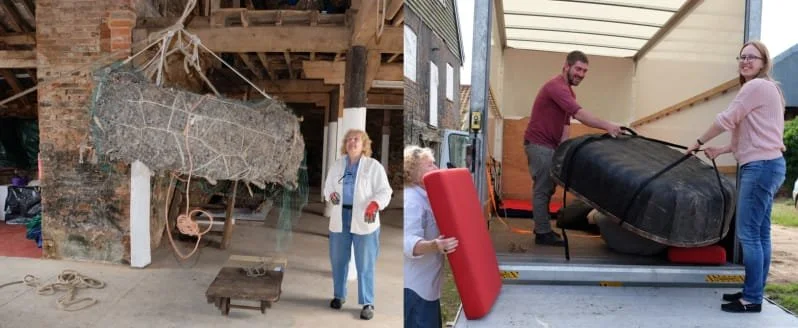
The crafts
A look at three of the twelve boats rescued by Valerie
1960s Sampan, from Dongting Hu Lake, China
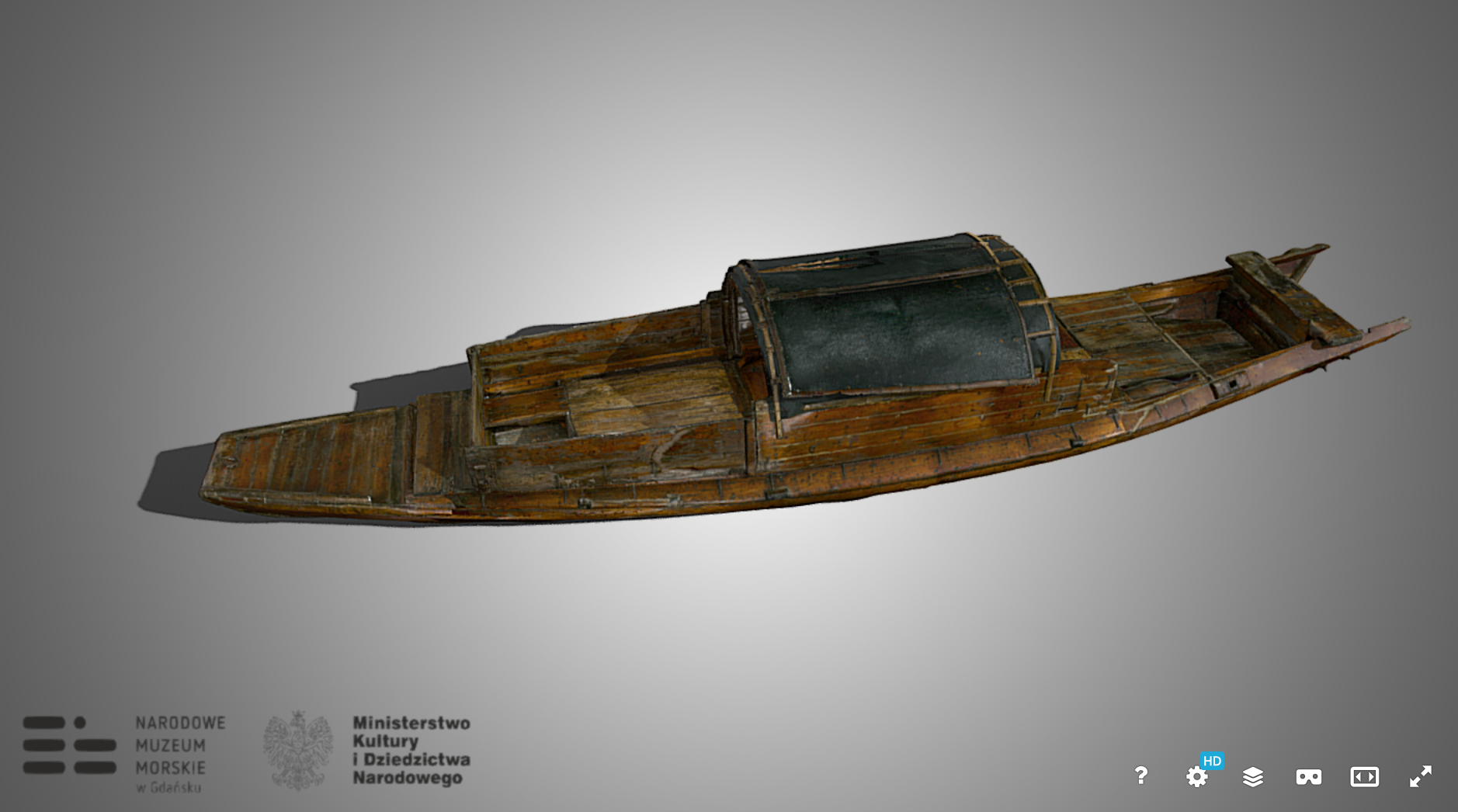
This boat, from Dongting Hu Lake, in Hunan province, China, is a sampan, built in the 1960s. It was built and lived in by a father and son. They slept in the boat’s little cabin, and fished using a large lift net, suspended from 10 meter long bamboo rods. was a year-long home for its owner and his son, who lived in a little cabin.
View the 3D model of the rescued craft here.
The Reed Raft, from Corfu Island
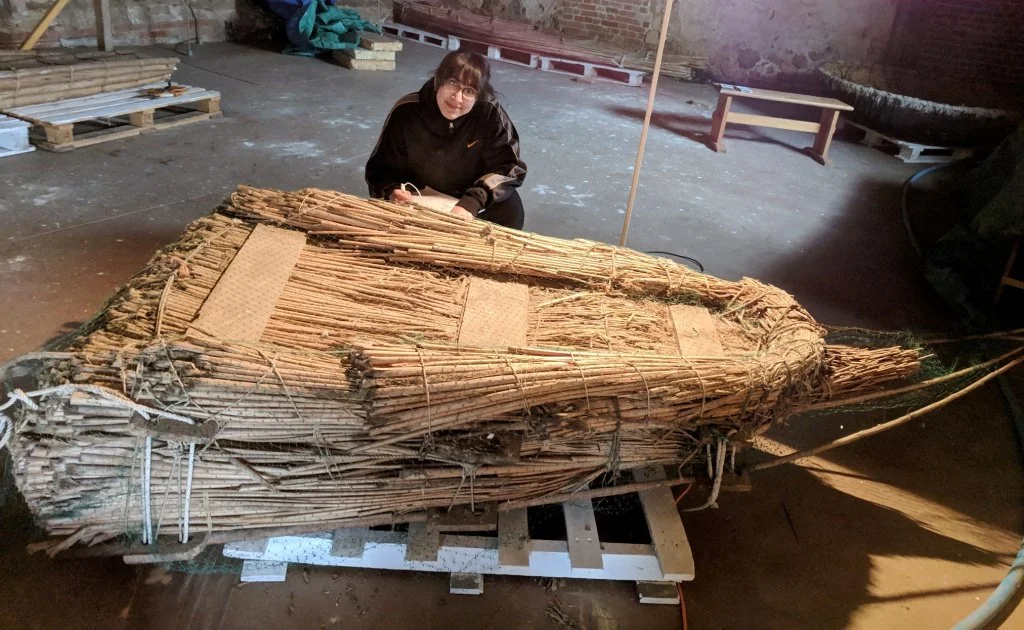
This reed raft was used until the mid-1980s on Corfu Island, off the north-western coast of Greece. It is photographed here in Suffolk, by Bob Holtzman.
The material is in fact dried stems of giant Italian fennel, tied in a triangular framework made up of cypress rods and planks.
In the modern day, this type of raft can be seen in use in Ethiopia and Palestine.
View a 3D model of the raft here, and find out more about reed rafts here.
1990s Parisal, from Southern India
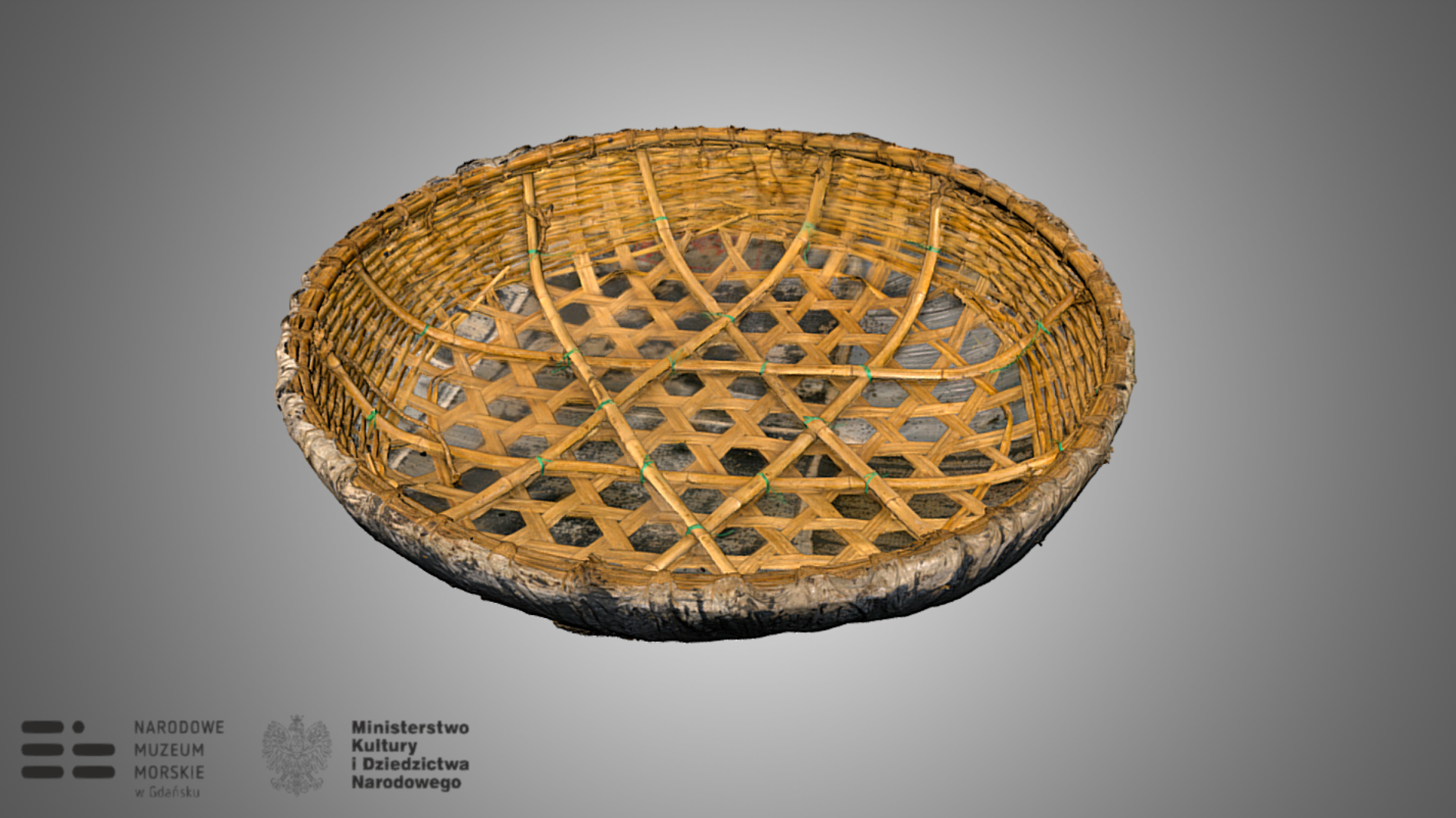
This round raft is known as a parisal, and is used on several rivers in southern India, as ferries and for fishing.
It is made up of woven bamboo strips, covered with tarred plastic bags which are sewn together. On land, because of its lightness, it can be carried on someone’s head, and on rivers it is propelled using a paddle.
View a 3D model of the parisal here, and watch it in use here.
Were you part of this project? Do you have any further information or photographs? Let us know using the form below or by emailing valeriesarchive@proton.me.