Obituary and eulogy
By Valerie Fenwick’s daughter, Sophie
OBITUARY
Valerie Fenwick, my mother, was an astonishing character born Valerie Howard Foulkes in 1936. She remembered happy toddler years in Ruislip, with frequent visits to the bomb shelter during the start of the Blitz. She was evacuated with her baby brother and mother to the Devon countryside, partly to help her badly injured and shell shocked father recuperate from Dunkirk. Nevertheless, he was soon off with the Royal Marines again training people up in Tenby for the D Day landings.
Valerie discovered in her childhood countryside rambles, a love of the outdoors and examining things on the ground. She met a famous Egyptologist who inspired her. By age 11 she was off across the country alone, joining archaeological excavations during her Summer holidays. Her fearsome and capable mother arranged her accommodation with local families.
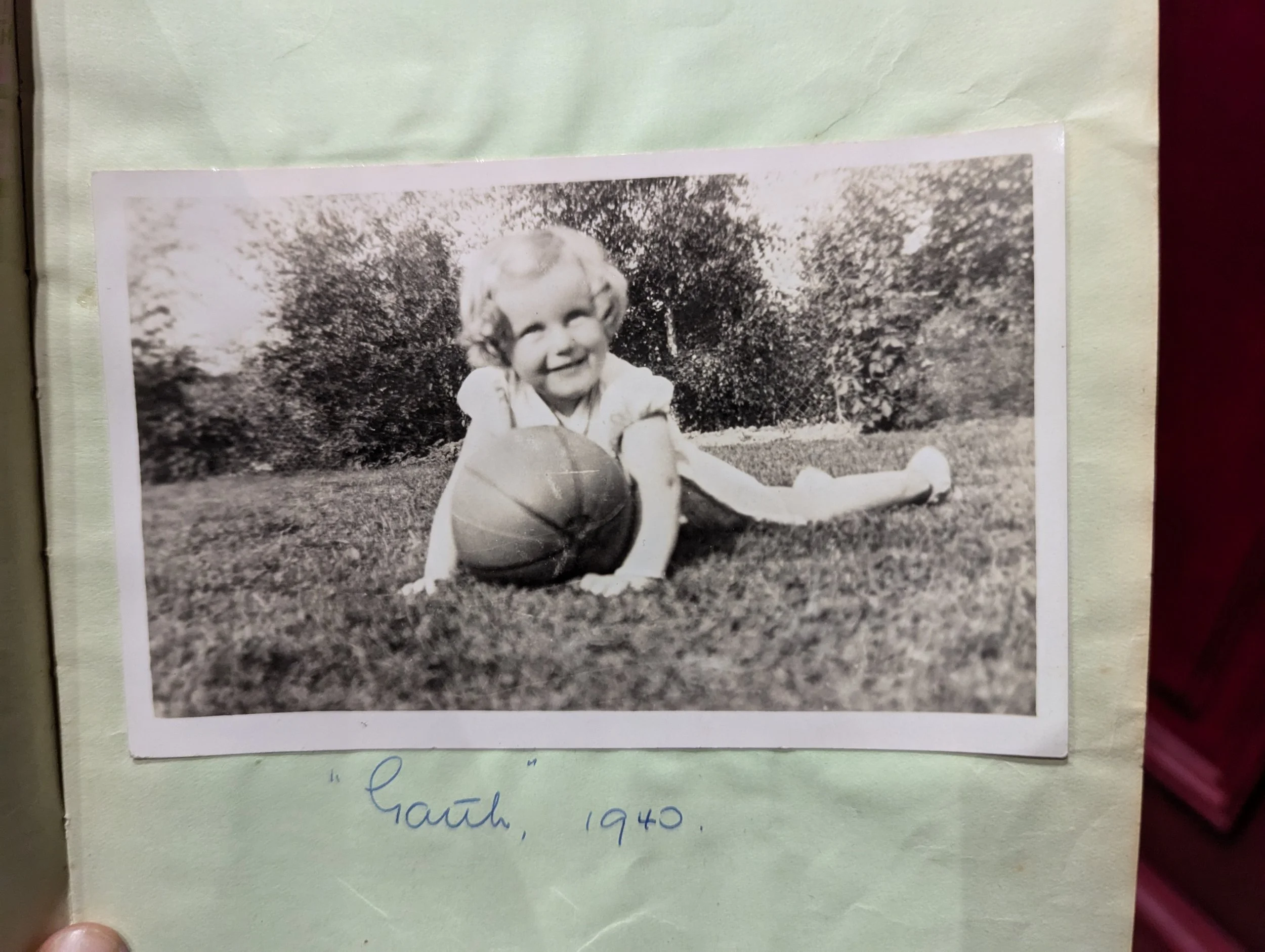
Valerie Fenwick as a child. Photo from Valerie’s personal archive. © Valerie Fenwick CC
Valerie worked ferociously hard at school to be able to study Classics at Cambridge, where women were only allowed to make up 10% of the student body. Once there she had a fine old time. She made snazzy dinners for her guests using only her tiny Baby Belling stove that frequently shorted the power supply at Newnham College, which she loved. Her seamstressing skills came in handy to be able to afford to go to the balls. When on her way to one such ball, she popped in on a don to finalise an application for a bursary. The learned woman exclaimed “you can hardly need funding if you can afford a dress like that!” Once Valerie explained the offcuts and reuse of furnishing fabric that made up the dress she was awarded the bursary on the spot for her ingenuity. I believe that funding took her on a dream post-graduation exploration of the archaeology of Greece and Corfu, one of the most magical adventures in her life.
After university, Valerie avoided the pressure to learn to type, so that she couldn’t be side-lined into administration. (Nevertheless later she had one of the first word processors I ever saw, and was adept at 2 finger typing.) Toying with the idea to join the graduate fast track at Marks and Spencer, she opted for a conservator role at the British Museum. There she learned to preserve, recreate and display artefacts. She always said how a Chemistry degree would have been more useful than Classics in this. Nevertheless, being able to understand Latin and Ancient Greek inscriptions and documents, including British monastic and legal records, was invaluable throughout her career. The museum job set her life on a course she continued till her last days, which ended in the new year of 2025, aged 88.
Aged only 25, the British Museum sent Valerie to Jerusalem to preserve and mount the Dead Sea Scrolls. These hotly contested alternative gospel documents meant people turned up with knives and/or conflicting religious ideologies, or just simple horror that a woman had been sent to carry out this important task. Some monks protected her. This is one of several working visits to the Middle East during her career where she discovered the plight of the Palestinian people first hand.
She married in 1965, becoming Valerie Fenwick. In 1967, with a young baby in the wheelbarrow, she set up the renewed excavation at Sutton Hoo, as deputy director of the dig under Rupert Bruce-Mitford. She sought out Basil Brown as a starting point, and learnt much from him about the 1939 excavation to build upon. In 1968 she had another new baby for the wheelbarrow - myself.
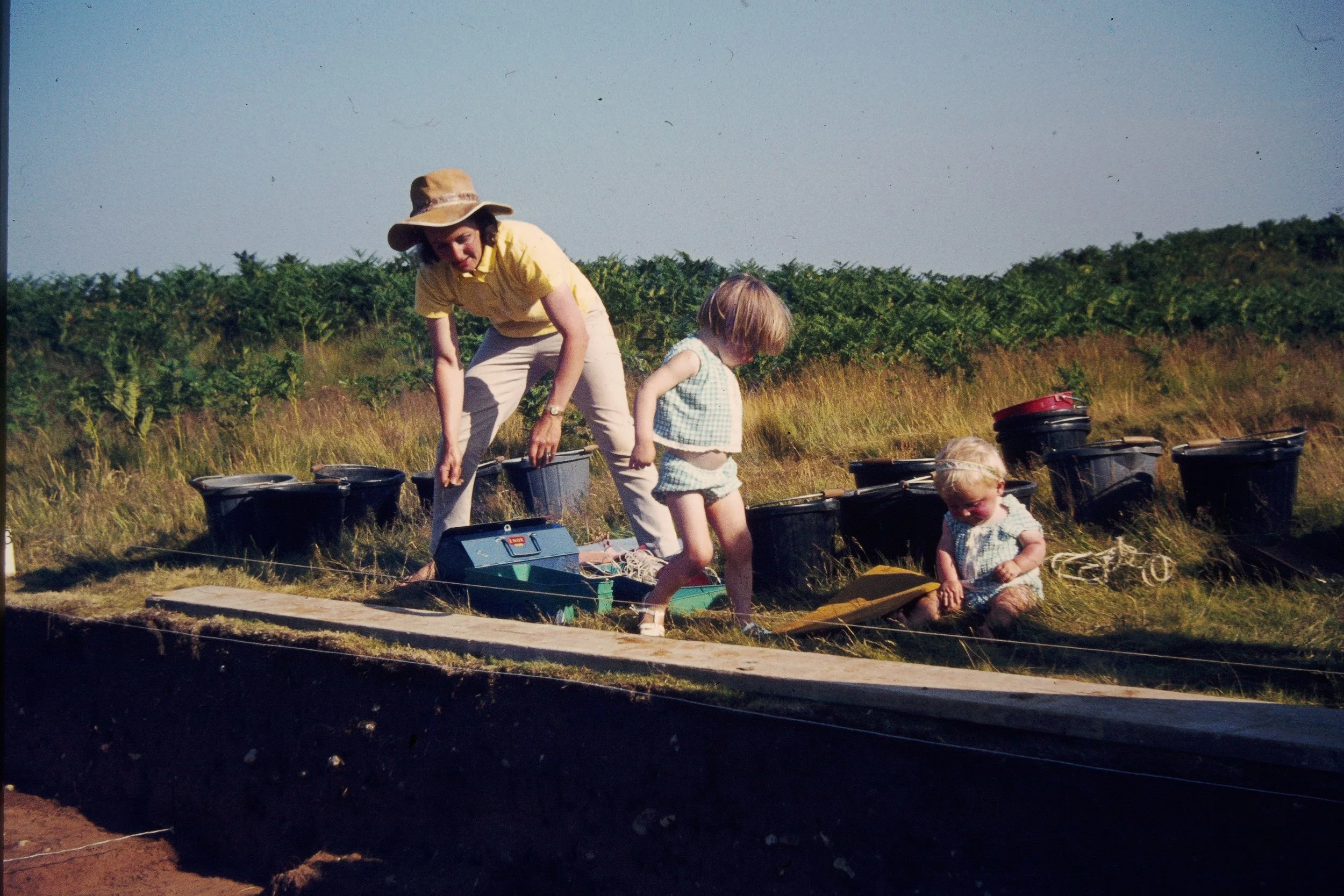
Valerie Fenwick with her children, Edwina and Sophie. © Valerie Fenwick CC BY-NC
Valerie was seconded to the National Maritime Museum to excavate the Anglo-Saxon Graveney Boat in 1971, later televised on ITV’s Chronicle series. From this fame she became famous in our family for shouting “more men, more men!” when she was the only one lifting at her end of a huge beam. Boats had become her specialism. This Thamesside ship excavation interrupted her Sutton Hoo work, which meant only part of her research there was written up. She published thought-provoking conclusions on the implications of the Mound 1 ship burial at Sutton Hoo only in 2023 in the Antiquaries Journal. A subsequent article will be made available posthumously.
Together with others who understood the historic importance and vulnerability of offshore wrecksites, she founded the Nautical Archaeology Society. This helped to formalise the discipline, and formed a basis for the long campaign that succeeded in passing the Protection of Wrecks Act of 1973. These were two of her proudest achievements. She led a multi-threaded professional life, working for the British Museum and National Maritime Museum during the first 15 years or so, then finding her independent yet collaborative academic freedom, to survive the inherent bureaucracy, misogyny and territorial egos of the day.
Valerie held various short and long term archaeological and editorial contracts, which enabled her to fund on a shoestring her own excavation at Burrow Hill near Butley, in Suffolk every Summer from 1979 and throughout the 1980’s. This had some significant Anglo Saxon finds, with insights that reflect mainly on times subsequent to the Sutton Hoo ship burials.
With her then innovative use of metal detection during careful stratified excavation, previously unknown coins were discovered. Also innovative was her development of community excavation, harnessing the skills and interests of local people, as well as archaeology students from the Institute of Archaeology, who have since had fruitful archaeological careers. Work on the finds from this site remains on-going.
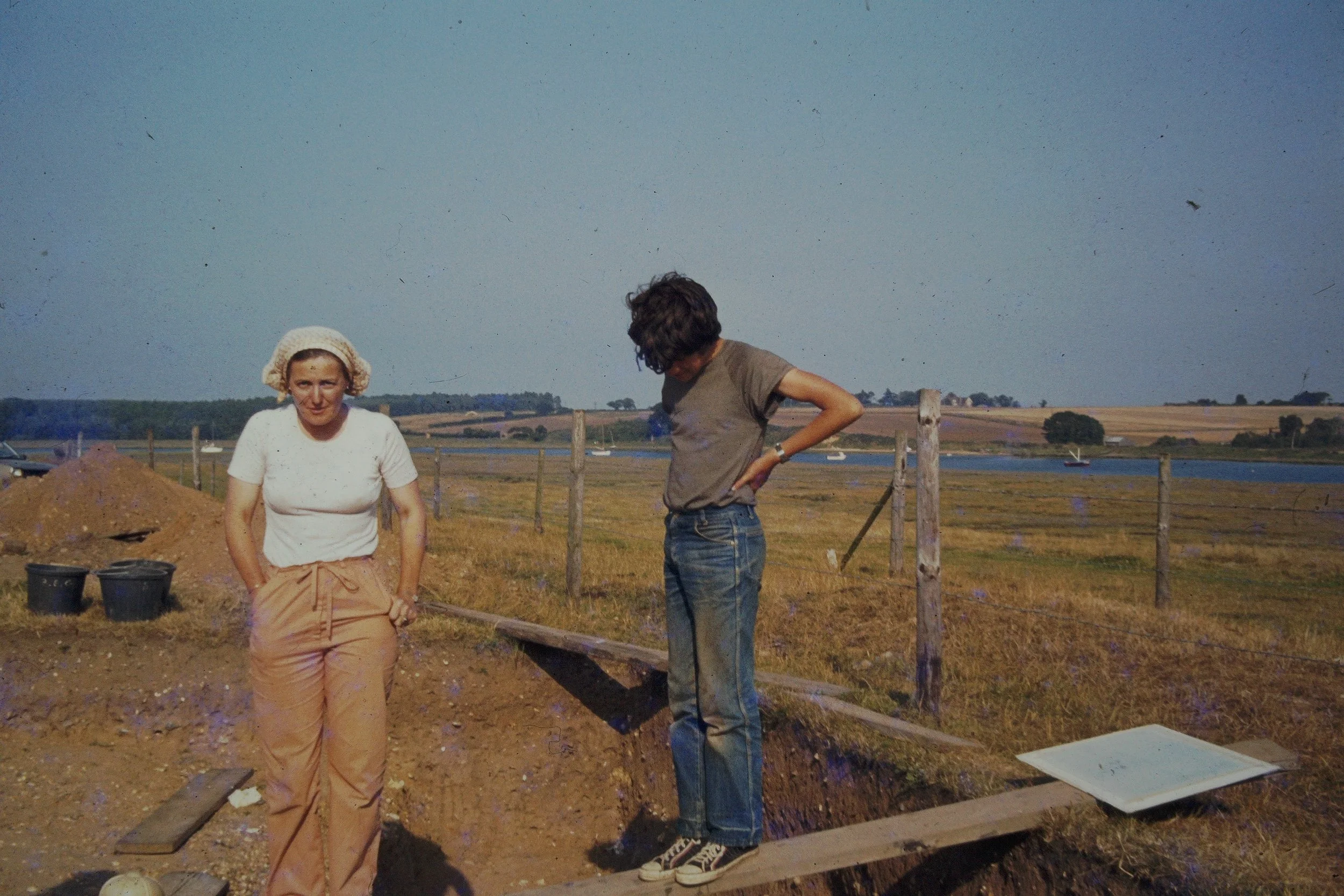
Valerie Fenwick at the dig at Burrow Hill. Photo from Valerie’s personal archive. © Valerie Fenwick CC BY-NC
Somewhere between everything else, she had several additional accomplishments. Valerie organised the rowing of the recreation of Argo, the boat of Jason and the Argonauts fame, from Maidenhead to Parliament, for more nautical campaigning in 1989. In 1996 I took her to the Orinoco Delta, where she found ancient boat building techniques to record, although she almost died of food poisoning, she claimed it would have been worth it. In 1998, with Alison Gale, she authored an accessible book on Historic Shipwrecks.
The third of her favourite success stories was the formation of MAT, the Maritime Archaeological Trust, which has become internationally respected at researching and publishing on undersea archaeology. It has been a fruitful coming together of some of the most delightful and able people in the field.
In later life she moved to Suffolk, her natural home after all those years of excavating there. With her friend Vic Harrup, they studied ancient archives, making good use of her Latin, to publish Untold Tales of the Suffolk Sandlings, a book full of riveting historical stories you will read of nowhere else. She helped rescue internationally significant boats condemned to be destroyed when Eyemouth Museum went bankrupt. The ones she herself purchased and temporarily stored in a kind friend’s barn, were donated to the maritime museum in Tczew, Gdansk, where the exhibition celebrates her achievement.
In the 2010’s she made several long expeditions to Goa, supported by friends armed with cameras and measuring tapes, particularly her dauntless friend Paddy. She was recording the boat building techniques of the rapidly dying skills of the local fishermen. She published on these findings which reflected the ancient history of boat building and use in the area. On a trip to Gozo and Malta, she made a discovery about the pre-historic use of rafts for sea-faring there. Hopefully historic rubbings of now worn away ancient graffiti there will be preserved by the Society of Antiquaries thanks to her.
Valerie continued to investigate, study and collaborate until her last days dying of bowel cancer at home. The last writings she wanted me to read to her were all archaeological publications. She basked in the new British Museum publication, Silk Roads. She and I listened to the Merovingians podcast I came across. We managed to contact the Kiwi creator, Nelson Bennett, to get his insights into what was happening across the seas to our Anglo-Saxons’ relatives and trading partners. This she said was her favourite discovery of 2024.
The best news was the completion of the purchase of a former primary school in Yarmouth, Isle of Wight, by MAT, to create a museum and centre of international learning for nautical archaeology. This has been one of her long term shared goals, and it was a delight that before she died she knew it would go ahead. She leaves friends, family and colleagues bereft from the loss of a supportive, fun, intelligent and original person, with a head full of incredibly varied knowledge, and always on for a good argument.
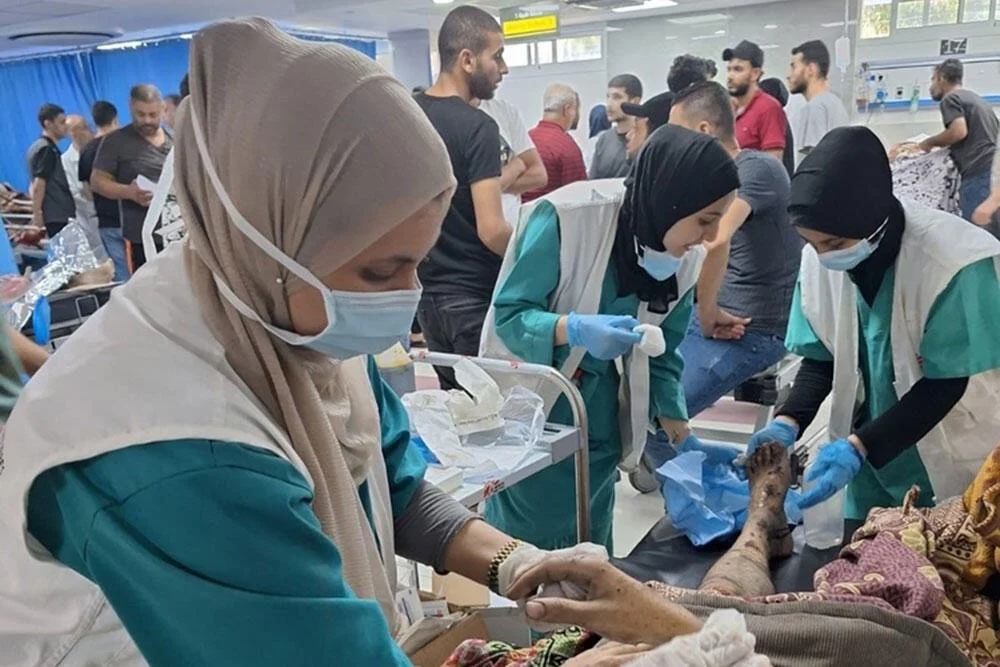
She supported many historic and research causes. Alongside these she was deeply concerned for the most vulnerable and in danger people in the world, by donating consistently to Medecins Sans Frontiers / Doctors Without Borders. Since she has already left funds to historic causes, her collection in memoriam is for MSF, to support those amazing medical people who go where others do not dare to tread.
EULOGY
To me Valerie was Mummy, Mumski mou or Mumma. I still call these names out often. To my children she was Wami, to her brother and close family, Ra. Never Val. Her favourite number was 666, yet she had no idea it was the number of the beast. She avoided fiction and scary films.
Her loves were particularly:
Boat building and what it has meant to diverse peoples
Factual writings (the bigger the book the better if you look at her library)
Ancient items and their stories
Clothes, whether beautiful or practical
Smells
Skilled craftsmanship
Good company and plenty of alone time
Home and garden creation
And above all, learning and discovering
She was exceptionally busy, involved and popular, so I saw her little in my childhood or own busy adulthood. Yet we were always close, and she was an engaged grandparent. To me she was first and foremost both cuddly and challenging, with the loveliest skin smell. Her in her signature long cotton nightie is an abiding visual memory. She brought books alive when I crept to her room clutching one on a Sunday morning, my father already up, and big sister still asleep. Those were precious happy times in the sunny room and big bed in Highgate, London, that she had birthed me in. I remember her telling me there about being atheist, which they never mentioned as an option at school.
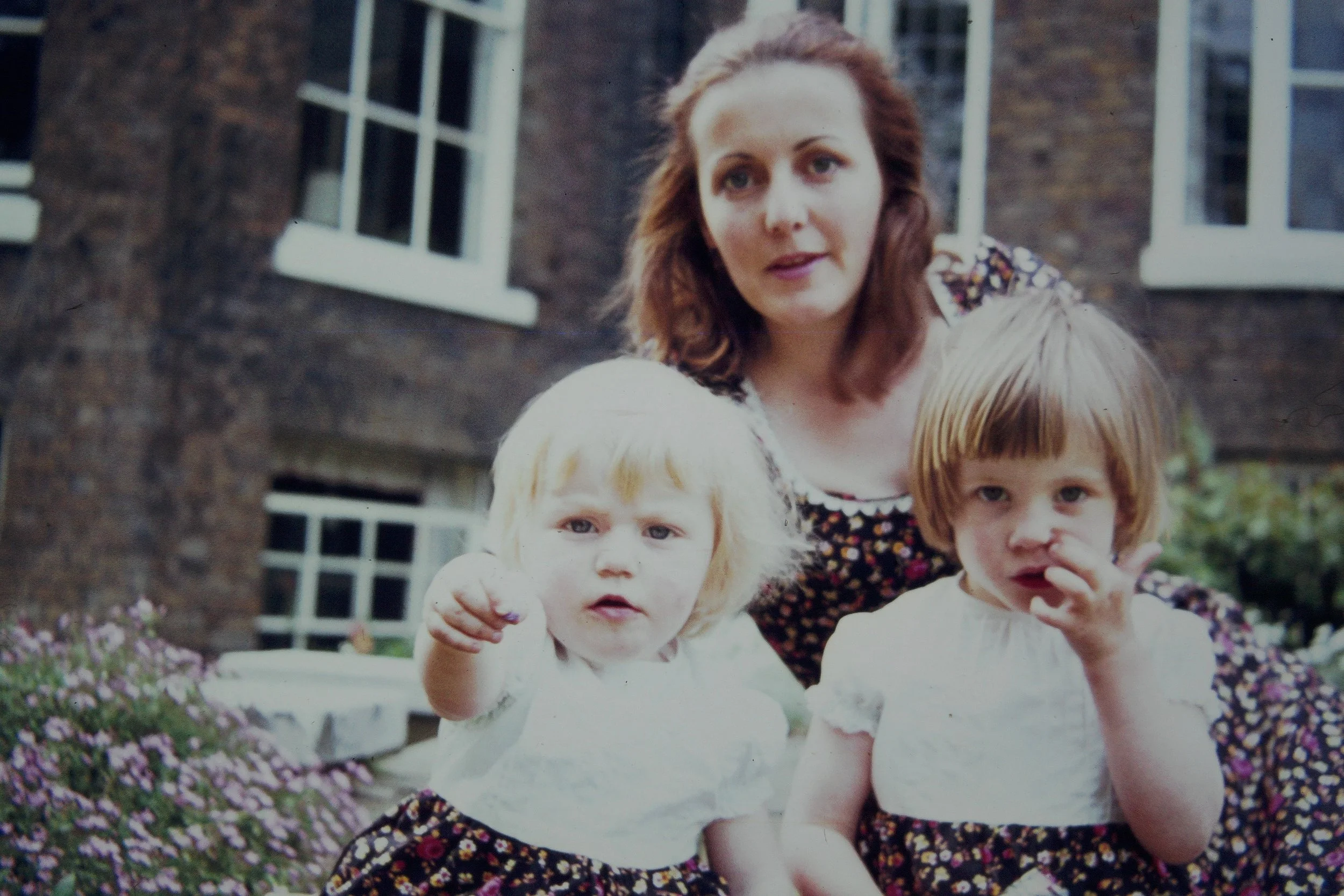
Valerie Fenwick with her two children, Sophie (left) and Edwina (right). Photo from Valerie’s personal archive. © Valerie Fenwick CC
Mumski was an easy-going, light-touch working parent. She gave me much responsibility from an early age on her digs, so I always enjoyed them. Tasked with improving my Latin, aged 12, she pushed aside the direly unstructured and uninspiring Cambridge Latin Course. She knew my organised mind would enjoy learning the grammar, and the Roman people would come alive through their poetry. I still remember the saucy poem by Petronius Arbiter ‘Quam nox fuit illa, deas deasque!’ - ‘What a night that was gods and goddesses’. This beautifully illustrates my mother’s love of learning, of the ancients as people, along with her irreverence to social norms, as well as a strong sensual side.
We became increasingly close in her later life. Caring for her in her dying months though tough was a privilege, with a surprising amount of laughter and deep discussions. She was up for an argument right until the end. Even when she had barely a monosyllable to spare, she’d still exclaim “no, no, no” or “rubbish” if she slightly disagreed with something said or read, along with iconic sighs of delight at something that pleased her. When Garry, Julie, Jeremy, Paul Damian and Dana visited, she came alive, speaking whole sentences all of a sudden, delighting in shared knowledge, keen to pass on the baton. She’d take days to recover her strength, but it was so worth it. Choreographing her final social calendar, arranging her care, works, home and admin, she said she realised how people became great with a good PA.
The NHS Community Nurses and St Elizabeth Hospice, as well as a live in carer at the end, made her final weeks at home possible and comfortable. Sara helped support with dealing with some of the paperwork backlog, including getting a final article on oysters published.
Charlie, Ruth, Catherine, Zuki, Tatum and Janine were all amazing at providing support and travelling across the country to visit. Valerie felt the love. Jim, Angie, Viv and Pat Naysmith, were all so kind in their local support and friendship, Their many kindnesses and understanding words made all the difference. My heart and love goes out to all the people of all ages, many sadly now gone, who added so much stimulation and warmth to my mother’s life. She deeply valued you all.
Donate to Valerie Fenwick’s memorial fundraiser here.
MSF medical staff treat wounded patients at Al-Shifa Hospital in Gaza © MSF